Wednesday, July 1, 2015

No better time to fight the machines than the past, present and future

Emilia Clarke and Jai Courtney shoot at a Terminator in "Terminator Genisys." Image by Melinda Sue Gordon, courtesy Paramount Pictures.
During its best scene, “Terminator Genisys” brings the entire franchise back to its comparatively humble roots that trace back 31 years now. It's the closest the film comes to hinting at the underlying terror behind the whole “Terminator” premise – one I’ll dip into later –  and it adds a little ferocity to a franchise that has plunged a little deeply into the Looney Tunes bin.
More of moments like that would push the film up to the echelons of “Terminator” and “Terminator 2: Judgment Day,” but “Terminator Genisys” is at least a little better than average summer action flick, and it will lead to innumerable arguments in the coming weeks. 
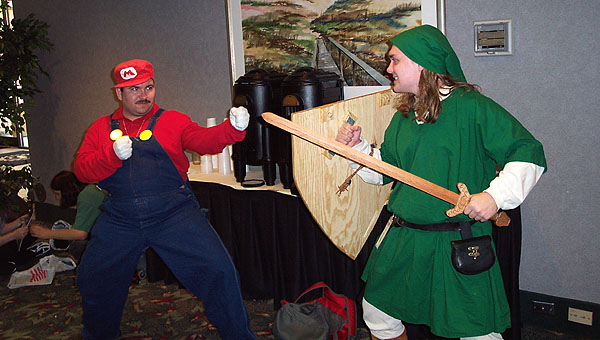
First image to pop up when searching "nerds arguing."
The worst thing about discussing “Terminator Genisys'” plot is the inability to avoid the big twist because the previews already revealed it. So to get it out of the way, the formerly heroic John Connor (Jason Clarke) becomes a Terminator hybrid after he is essentially infected by a cyborg virus courtesy of the embodiment of Skynet itself. This comes shortly after the human race's victory over the machines, albeit a win hindered by the computer system's last-ditch effort to send a Terminator, a T-800, back in time to kill Clarke's mom. Clarke responds by sending soldier Kyle Reese (Jai Courtney) back to 1984 to save his mom from the Terminator.
That's where the story set in place by the original “Terminator” ends, as mother Connor (Emilia Clarke) is more than capable in this timeline to defend herself from a T-800. More time traveling shenanigans have resulted in another Terminator, dubbed Pops (Arnold Schwarzenegger, back in action), going back even further in time to protect Emilia Clarke for about a decade before Courtney’s arrival. After dispatching the Terminator sent to kill Emilia Clarke in 1984, along with a T-1000 (Byung-hun Lee) sent to murder Courtney, the two humans travel ahead to 2017 to stop the mysterious Genisys program from evolving into Skynet and destroying the world. An even older Schwarzenegger meets them there, along with a metallic Jason Clarke, a cop who Emilia Clarke and Courtney saved back in 1984 (J.K. Simmons), and a rather angry computer system that will protects itself at all costs.
It takes about two hours to sort all of that out, or at least come as close as humanly possible. Trying to unravel the time-travel logic behind “Terminator Genisys” is not a task for the faint of heart or the annoyingly logical; so many holes exist that the film's attempt to address and gloss over that point still doesn't make sense. The original’s time traveling mechanics are complicated enough, although admittedly half the fun of the first three Terminator films comes in the form of countless arguments about the logistics.
If not knowing is half the fun, the spectacle of the film serves as the other half. As an action film, “Terminator Genisys” hits all the requisite notes with aplomb and good quality, mixing the necessary CGI alongside a few nifty and practical live-action stunts to form an engaging viewing experience. One notable technological problem stems from the attempt to make old Schwarzenegger look young again with some digital manipulation – it definitely doesn't cross over the uncanny valley.
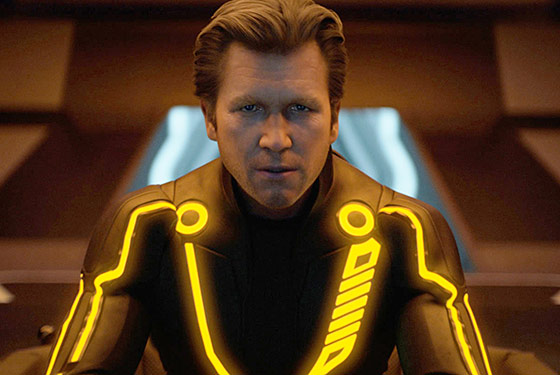
At least it's a step up from this.
“Terminator Genisys” looks pretty good, but the circuitry below the exoskeleton is a little wonky. It hits the fatalism theme – the idea that Reese and the Connors are controlled by destiny – with too much force, eliminating a more honest ambiguous answer for a more certain and comfortable resolution. The film also never does quite enough to develop the Kyle Reese/Sarah Connor relationship, although some of the problem is a lack of romantic rapport between Emilia Clarke and Courtney. They kick ass together famously, but their relationship lacks sexual spark. Then again, it is nice to have Schwarzenegger back, and, while this is strange to type, the man performs his role as a human killing machine with nuance and a dash of longing.
And to complete the time jump from the opening graph, “Terminator Genisys’” highlight is a simple scene in which Courtney has to face off against a T-800. He's clearly outmatched by the relentless metallic beast with soulless red eyes and a driving urge to kill, and a look of fear rends itself on Courtney’s face as the monster man gets closer and closer and the space between them diminishes.
The scene is a reminder that, yes, there was a time when the Terminators were totems of horror,  I have to say it was nice to be scared of a Terminator again, if only for a moment.

I just want a hug ... and to rip your spine out.
Review: Three and a half out of Five Stars


Click here to see the trailer.

Rating: PG-13
Run time: 125 minutes
Genre: Action/Sci-Fi


Ask Away

Target audience: “Terminator” fans and people with a rooting interest in Arnold Schwarzenneger's career.

Take the whole family?: All sorts of murder and mayhem occur on screen, certainly more than enough to scare off the really little kids.

Theater or Netflix?: If you do see it in theaters, don't spring for the IMAX or the 3D glasses.

Do you need to watch any of the prequels?:  I already skipped part four and suffered no repercussions for doing so, and you can definitely avoid round three without losing track of anything . The original “Terminator” is really the only one you have to see to understand what's going on, but you should still watch “Judgment Day” because it remains a genre masterpiece. Speaking of which ...

Watch this as well?: Revisit “Terminator” one and two, and step back a few years to check out the Bruce Willis/Joseph Gordon-Levitt time-travel vehicle “Looper.” Watch “Primer” too if you want a time travel flick that will just blow your mind.

Dancing your troubles away

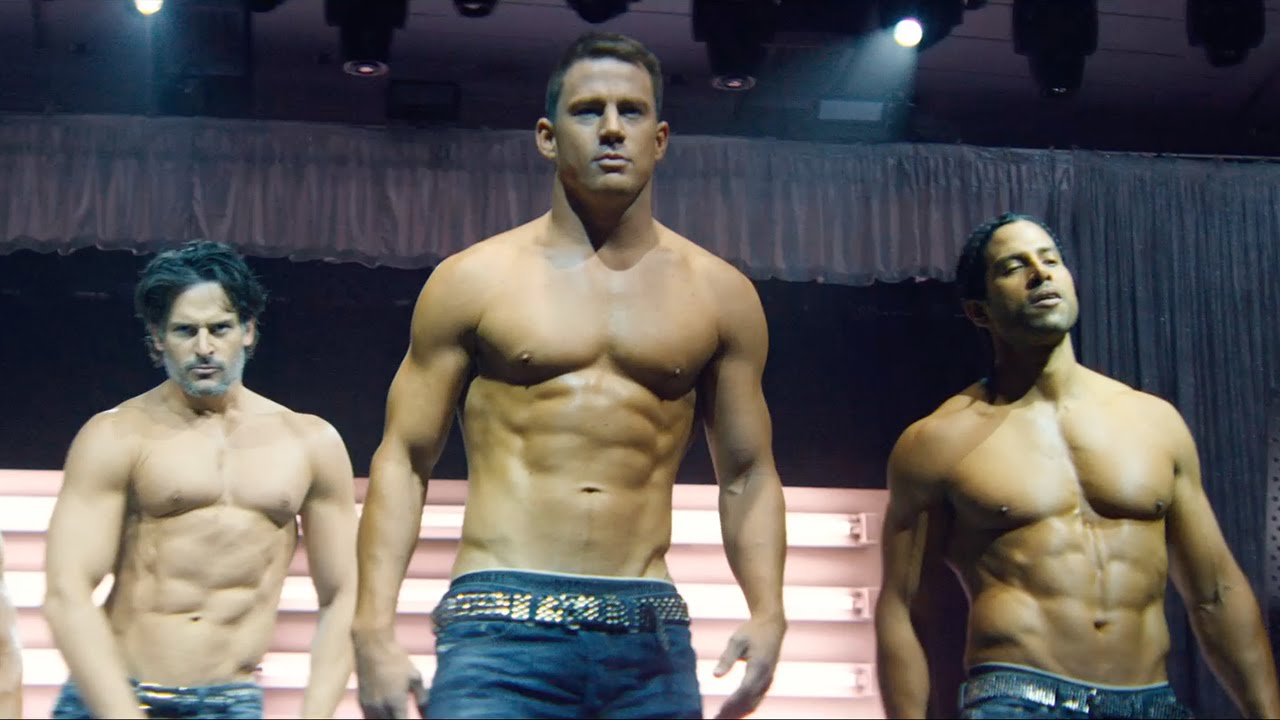
"Magic Mike XXL's" stars begin one of their routines. Photo courtesy Warner Bros.
Nothing happens in “Magic Mike XXL.” I mean, there's the traces of a story that leads to a conclusion, but the stakes are almost nonexistent and the adversity the characters face are minimal. It's a funky little film, a celebration of everything the original “Magic Mike” rallied against.
Strangely enough, the sequel is better off for veering away from the trodden path, especially after losing the dangerous magnetism of Matthew McConaughey's Dallas. Replicating the original’s darkness without McConaughey would be a fool’s errand, so it made sense to take the action in a new direction and creating an audacious, silly, sexually charged, lovable romp with a just a hint of depth.
“Magic Mike XXL” is a road movie at heart, following the minor misadventures of the titular Mike (Channing Tatum) and a few of his old club friends (Joe Manganiello, Adam Rodriguez, Kevin Nash, Matt Bomer and Gabriel Iglesias). Tatum's buddies are on their own now – McConaughey's Dallas and Alex Pettyfer's Kid absconded to Macau – and amid a sojourn to a stripper convention in South Carolina for one last ride. (If that sounds familiar, the mantra is employed in another summer flick, “Furious 7.”) Tatum is intrigued by the idea and decides to join his comrades after a three-year stripping sabbatical because you can't take the dancer out of the man. On the road they go, reinventing the act McConaughey forced on them and finding out a little more about themselves while preparing for that last big performance before they go do … something else. Those details remain unclear and really don’t matter.
The group also meets friends both new and old along the way. Jada Pinkett Smith pops up as Tatum's former employer, lover and emcee; she’s joined by one-time “Community” star and current rapper Donald Glover and long-time New York Giant defensive end Michael Strahan, both of whom bust a few moves. There's a new, quasi-love interest for Tatum in Amber Heard's character, Zoe, and Andie MacDowell provides an overnight refuge, a large southern accent, and a rather unsatisfied libido. Oh, and Elizabeth Banks makes an appearance as part of the Summer of Banks.

Seriously, Elizabeth, you deserve a break.
“Magic Mike XXL” gets off to a slow and kind of frustrating start. The justification for inserting Tatum into the group’s proceedings is opaque at best and very much shoehorned; sure he still loves dancing, but he knows moving on was the right decision, and it doesn’t feel like he’d decide to take two steps back just because. There's also a missing level of complexity and darkness that made “Magic Mike” such a compelling film.
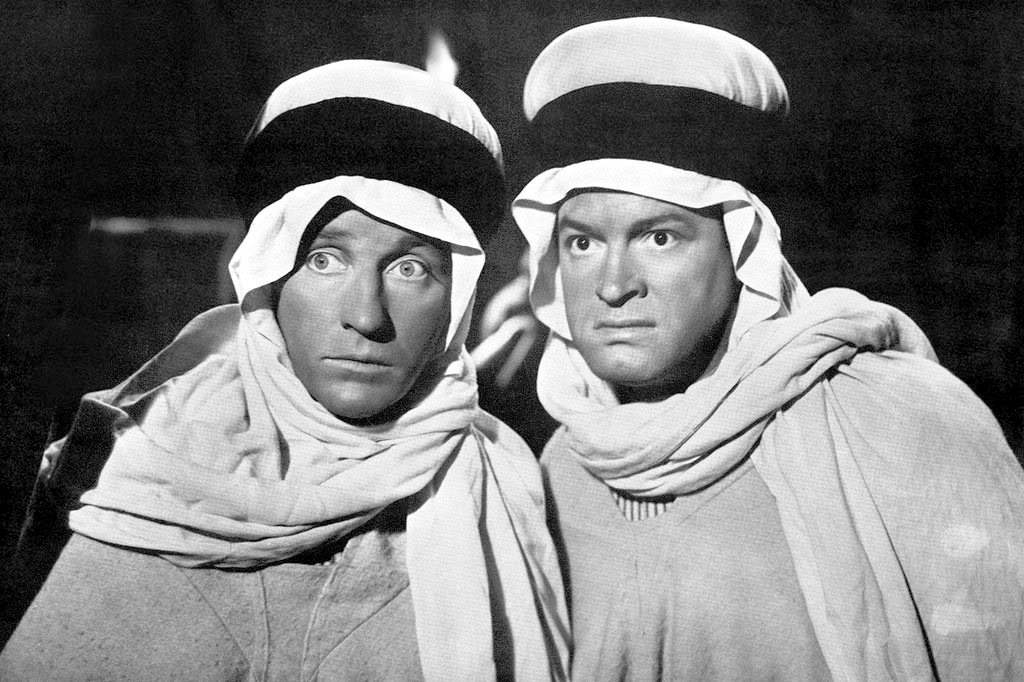
The tonal shift between the two films is jarring and difficult to account for, but the sequel really begins to take off once the characters hit the road and partake in their shenanigans. “Magic Mike XXL” has a thing plot that serves as an avenue to hop right into the delightful, wonderful and occasionally magical dance sequences and engage in some harmless ogling. (I may or may not have tossed 10 imaginary singles at the screen during Tatum's routine.) It’s sort of like a Bing Crosby/Bob Hope road movie, but with much less singing and a little less sexiness.

More than 70 years later and you can still feel the tension.
A good portion of the fun of “Magic Mike XXL” – and the movie is an utter joy – comes when watching the central dancers just mess around while traveling, reminiscing about the past and supporting one another in professional and intimate engagements. They’re a likable collection of people, the kind of guys who would make any party far more interesting without messing up the vibe.
In other words, “Magic Mike XXL” is a straight-up bro film, albeit one in which the characters are focused more on celebration than conquest. That’s due in part to a strong feminist underpinning (something along the lines of a feminist bro movie) in which the women are, more often than not, the ones in control, the characters engaging in the fun times normally associated with male behavior. At one point, MacDowell's character laments a life with only one lover as Nash waxes ruefully about wanting the exact opposite. It's a clever twist for a film otherwise engaged in goofy fun.
Any praise I have for “Magic Mike XXL” is coupled by acknowledgement that it is a lesser film than its progenitor. There’s little bite to be found in the sequel, no grittiness or roughness in this new version and a little less charisma without McConaughey (even though Tatum is a sweetheart). Still, there’s always a place for fun in film, especially when watching characters follow their bliss with such glee. As “Magic Mike XXL’s” final scene shows, there’s nothing more satisfying in life than winning your dream.

Review: Four out of Five Stars

Click here to see the trailer.

Rating: R
Run time: 115 minutes
Genre: Comedy

Ask Away

Target audience: Very much a female-oriented film with a corresponding viewership, although guys with a little sexual leniency will like it.

Take the whole family?: Probably not for the kids, but your cool aunt will have a blast if you're kind enough to take her.

Theater or Netflix?: It's fun enough for a screening as long as it has a bar with it; this might be the perfect mimosa movie.

How much does the film miss Steven Soderbergh ?:  He's still on hand as a cinematographer and producer, but the film's tonal change is due in large part to his absence from the director's chair. There's a sense of heaviness missing from the sequel, a burden that brought out the best of Channing Tatum (he's still good, but not at the same level). Soderbergh is a rare director who can do crowd pleasing when needed alongside a satisfying edge.

Watch this as well?: Watching the original helps understand the motivations for this one, and “Magic Mike” is also a much, much better all around film than its sequel. Another interesting but less aesthetically mesmerizing option is “The Full Monty.”

Then again, it really depends on your taste.

Thursday, June 25, 2015

What the hell is wrong with Seth MacFarlane?

Ted, voiced by Seth MacFarlane, celebrates in a scene from "Ted 2." Photo courtesy Universal.
I'm really, really trying to determine why the “Ted” movies are a thing. I mean, I know why a studio opted to spend money to make two “Ted” films – the box office recoup from the first run through was quite impressive – but, after watching the second film and hopping over the first one, I don’t get it. I don't understand the love audiences have for the central character, or his sidekick, or the humor, or really anything about the “Ted” franchise. I’m most perplexed why people have and will hand over even more money – enough to justify a third one, more than likely – to support a vain, bothersome, atavistic piece of pablum passing itself off as a comedy?
Perhaps the answer to those questions falls upon director/co-writer/voice of Ted Seth MacFarlane, whose career has shifted from the creator of a failed television show to the mastermind of a media empire centered on that same failure. (What did Fitzgerald say again about second acts?) The man has a very specific comedy template, one used once a week on the capital of his domain, “Family Guy.” There's vulgarity, a plethora of pop-culture references, an entity that talks even though it shouldn't, heaping doses of offensiveness, even larger doses of solipsism, homophobia, regressive male behavior, mistreated female characters, and a weak attempt at finding heart.
You can find all of it in “Ted 2,” which features MacFarlane's irascible Bostonian bear making lewd, puerile jokes and gestures alongside his best friend and equally loathsome creature John (Mark Wahlberg). The crude Pooh knockoff opens the film marrying the woman I gather he started seeing in the first film, Tami-Lynn (Jessica Barth), although the marriage starts cracking at the seams because she married a talking teddy bear incapable of anything resembling sex. For whatever reason, MacFarlane's Boo-Boo decides having a kid will improve their marriage (just terrible, terrible logic), which, after some semen-based shenanigans and a failed adoption attempt, results in the state of Massachusetts declaring the stuffed animal to be a piece of property and not a person.
Thus, a civil rights lawsuit is launched to reverse the decision, spearheaded by comely, neophyte attorney/pothead Samantha Jackson (Amanda Seyfried), who becomes Marky Mark's token love interest because of course she does. There's also an underdeveloped subplot about a creepy janitor named Donny (Giovanni Ribisi) who wants to make his own version of the little fuzzy Ursa after nearly killing him in the first film. He works as a janitor at Hasbro, a company that should have declined to participate in this.

Another moment Hasbro should have backed away from.
So that's “Ted 2” in a nutshell, sans the patented MacFarlane brand of humor taken up a few notches thanks to the “R” rating he gets to play with. He tries ever so hard to offend, chucking as much dirty material into his script as humanly possible to either appeal to the lowest common denominator or rile up people he considers too sensitive. He’s like an 8 year old learning to curse for the first time: It's a little annoying at first but you kind of start feeling bad for the little guy because, gosh darn it, he's giving it his best shot and you don’t want to see him start crying.
Crudeness can't compensate for laziness, a trait MacFarlane exhibits in spades. The man is the master of using dated references – viewers get an unnecessarily long “Breakfast Club” montage and an homage to “Jurassic Park.” – just to tell the audience that, yes, he remembers flicks like “Flash Gordon” too. His punchlines are simple, obvious, staid and reflect minimal levels of original thought. Hell, his jokes even disrupt the film’s time line: Wahlberg drops a Tom Brady joke centered on recent legal events, but MacFarlane and his co-writers kept in a one liner about a Boston clothing company that closed four years ago.

  It was something of a local icon for New Englanders.
There's no precision to the  humor in “Ted 2,” or really in anything MacFarlane does. He's a comedic grenadier, a person who just launches explosive after explosive after explosive hoping a few of them hit something. Inevitably, some shrapnel will strike – an early cameo has a satisfactory conclusion after the end credits – but the majority of MacFarlane's one-man offensive lands harmlessly in a vacant field, miles away from their intended target.
None of this would irritate so much if the characters had some redeeming value. Alas, MacFarlane's Teddy Ruxpin knockoff and Wahlberg spend their free time pulling mean, childish pranks on people and aspiring to be the worst versions of themselves. Wahlberg complains at one point that his ex-wife wanted to change him; I have a hard time blaming her.
So, again, why is the “Ted” series a thing? Why do people want to watch stale jokes about Neil Diamond songs accompanied by a gay marriage parallel that manages to offend gay people? Most importantly, why do audiences continue to enable MacFarlane?

Review: One and a half out of Five Stars

Click here to see the trailer.

Rating: R
Run time: 115 minutes
Genre: Comedy


Ask Away

Target audience: Seth MacFarlane sycophants.

Take the whole family?: The teddy bear is moderately cute, but the vulgar things he says and does make the movie rather inappropriate for kiddos. Stick within striking distance of the “R” rating.

Theater or Netflix?: Don't blow your cash on the theater.

What is it with Seth MacFarlane and women? I have no idea what happened to him to give him such disdain for the opposite sex, but he does have a problem with them. The women in “Ted 2” are denigrated, demeaned and shamed for not acting like perpetual 13-year-old boys. The problem isn't limited to this film either; the things “Family Guy” have done to Meg and other female characters are grotesque.

                                                        A few examples, if I may.

Watch this instead?: There's nothing wrong with juvenile humor when it's done right. Take the “21 Jump Street” adaptation, which grounds those jokes in some legitimate emotional stakes and even has characters to root for.

Friday, June 19, 2015

War at its dreariest

Alicia Vikander stars as Vera Brittain in "Testament of Youth." Photo courtesy Sony Pictures Classics
Bombs light up the otherwise darkened French sky as unseen German troops march closer and closer to British nurse Vera Brittain's (Alicia Vikander) modest encampment. She's tending to dead and dying enemy troops amid the destruction of World War I, moving around the small bunker as booms erupt and the staff worry about what the enemy will do if the raid's successful.
The time it took to read that sentence is a pretty even match for how long “Testament of Youth” lingers around what should have been its most intense and engrossing moment. The scene instead shifts to the morning after, and the drama built up in those moments of war melts into a puddle of disappointment. Somehow, and for some unfathomable reason, a film about the horrors of World War I shoves the action aside and pushes interminable scenes of weeping in its stead, creating an impeccably dull and slight two-plus hour viewing experience.
Some of the absence of war issue traces back to the film's focus on Vikander's Brittain, who was a real person and wrote a memoir about her experiences during wartime. Her perspective resides behind the line, watching her brother Ted (Taron Egerton), beau Roland (Kit Harington) and comfortable acquaintance Victor (Colin Morgan) endure the terrors wrought by trench warfare. There are very few moments of them actually serving either, but viewers do receive ample opportunity to watch them gallivant about at the Brittain household (headed by reliable character actors Dominic West and Emily Watson) during better days and for temporary war reprieves. Vikander also spends a bit of time at Oxford before and after the war, allowing viewers to spend a few lovely moments with Miranda Richardson as an interesting and rather underwritten teacher. She's kind of a package deal with Vikander's goofy aunt (Joanna Scanlan), who offers something resembling comedic relief.

Kind of like this stock photo image of a British woman, but less animated.
“Testament of Youth” isn't a bad film – the aesthetics are sometimes striking and the acting is passable at worst – but it doesn't meet the standards of an interesting film either. The film is an unequivocal bore, a trite depiction of what was a terrifying and brutal war and reduces it to a romantic tear-gasm that spends precious few seconds chronicling the war’s fear and havoc. The scene depicted in the opening paragraph is as close as the film gets to earning that feeling, but it's edited to death and almost elided over completely to shift viewers back to safer, less interesting territory.
This complaint isn't a request for more scenes of war and battle, as limiting the carnage visible on screen is a good strategy given the focus of the film is on Vikander. At least, that's how it should be; instead of really delving into what she had to cope with on a quotidian basis while tending to German troops, “Testament of Youth” is centered on her relationship with the three central male figures in her life. Her emotions are based entirely on them, her thoughts and feelings motivated by their well-being and on their worries and concerns. What's the point of telling the story from her perspective if that view is shifted away from her so frequently?
It's frustrating to watch Vikander mope about when the filmmakers continue to hint at a more involving wartime experience for her. The horror of war isn't limited to the people serving on the front lines, and it's clear Vikander's Brittain experienced more than her fair share of tragedy while surrounded by the sick and dying. “Testament of Youth” even teases a bit of the moral quandary she underwent tending to the enemy during wartime. Alas, it remains little more than a tease, a fleeting moment of philosophy amid a rambling, disjointed period piece told the same way a as a 5-year-old describes a trip to the farm; this happened, and then this happened, and then this happened, and then everyone died.
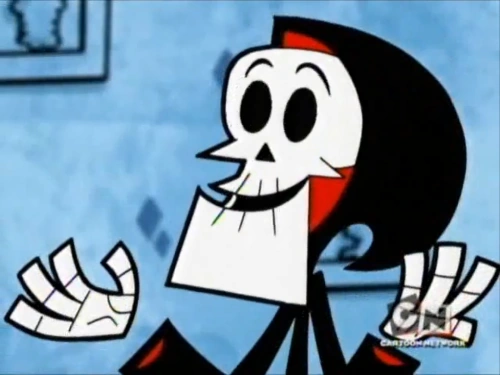
And then the Grim Reaper took a break for tea.
Fortunately, “Testament of Youth” does come to an end, which arrives after a few more dry scenes that would serve as more natural conclusion. A postscript ensues, as it does with these types of films, the credits roll onward and the lights pop on inviting viewers to leave and ultimately forget about this disappointingly unremarkable film.

Review: Two out of Five Stars

Click here to see the trailer. 

Rating: PG-13
Run time: 129 minutes
Genre: Drama

Ask Away

Target audience: I gather Anglophiles and World War I hobbyists.

Take the whole family?: Content wise the PG-13 is a tad strong, but interest wise there's no way in hell anyone younger than that would want to watch this.

Theater or Netflix?: Or, you know, neither.

Does 'Testament of Youth' succeed at all?:  It at least doesn't glorify the war experience, an important factor for a film written by a pacifist. The argument against making war an epic experience isn't as persuasive as it should be, and a large amount of it is due to how trite and dry the rest of the film is, but it doesn't try to sell war as a worthwhile pursuit. So it has that going for it, which is nice.

Watch this instead?: I'd go with the endearing “Joyeux Noël,” also a World War I film based on real events, and the epic World War II film “Atonement” over this.  

         "Joyeux Noël" also proves Christmas can be magical regardless of the circumstances.


A funny thing happened while leaving Inglewood

Tony Revolori, Kiersey Clemons and Shameik Moore in a scene from "Dope." Image courtesy Open Road Films
“Dope” is a film about falling back into the comfort of retro culture, except when it indulges in the pleasures of 21st Century technology. It's a film about the tragedy of street violence and the difficulties growing up in that environment, except when it swerves into comedy both physical and vulgar in nature. It's a movie steeped in neighborhood realism, except when it veers off toward a Wile E. Coyote-esque chase sequence through Inglewood.
All of that is to say “Dope” is a complex film, one that sheds the categorizations its protagonists define themselves by. It has a lot to say about black culture, the white appropriation of black culture, sexuality, economics, the American Dream and violence. It has perhaps too much to say to maintain a smooth and clean pacing, but”Dope” always expresses itself wit, smarts, a deft touch, and a killer soundtrack.

                                                              For example. 

“Dope” is a film divided at its simply by levels, the top of which is the simple story of three teenagers in Inglewood, Calif.: Malcolm (Shameik Moore, rocking a hi-top fade), Diggy (Kiersey Clemons) and Jib (Tony Revolori). They're self-proclaimed geeks, a smart group of friends who listen to 1990s-era rap, go old school with their sartorial choices, play in a punk band, ogle girls (mostly Zoë Kravitz), study to get into college – Moore's aiming for Harvard – and try very, very hard to stay out of trouble.
Level two is when that last part falls asunder when Moore agrees to do a small favor for local drug dealer Dom (rapper A$asp Rocky) that results in a disturbing amount of Molly (aka ecstasy) and a handgun finding their way into his backpack. Going to the cops isn't an option, meaning they have to find a way to get rid of the stash without drawing the ire of drug dealers, users and a rather intimidating businessman (Roger Guenveur Smith).
Then there's level three, the story of how they extricate themselves from a really insane situation with the help of a surprisingly brilliant drug user (Blake Anderson). They come up with an ingenious way of selling the unwanted product (one that doubles as a promo for bitcoin), but have to watch out for federal agents and potential interlopers who would cause their best laid plans to backfire on them.
The description makes “Dope” sound like a drama, and while it does have those elements to it, the film copes with the dark realities of growing up in an undesirable place and circumstances with humor. A fair bit of the humor is vulgar and sophomoric, although those are balanced by some clever callbacks, jokes via voiceover narration, and one or two utterly macabre punchlines that make a viewer feel bad for laughing. 
“Dope” wouldn't succeed without the comedic element (the humor ties a lot of it together) but the film's genre subversions and cultural politics ensure it'd remain interesting without it. There are moments when “Dope” aligns itself to 1990s films like “Boyz n the Hood” and “Menace II Society” – films that serve as morality plays warning against the violence of the cultures and neighborhoods depicted in those films. Anyone who has seen either knows bad things happen to the lead characters due to circumstances both outside, but especially within, their control, and “Dope” adds a little of that ominous air to its proceedings too. Yet it swerves away from the portentous and instead uses what would be punishable activities in those films as a vehicle toward success for Moore, Clemons and Revolori. They dip into the dark side, engage in the things they tried so hard to avoid, and come out in much better shape than when they entered.
Drug culture does get a shout out in “Dope,” along with about a dozen other topics ranging from self identification and the complexity of black culture to the appropriateness of white people dropping the N-bomb. Writer/director Rick Famuyiwa uses his movie as a platform to address those issues and does have success in spurts, especially in the brevity of that last point.

                                            I'll let Chris Rock explain the issue. 

The problem though is he tries to say too much, tries to get far more material in “Dope” than there should be. It kills the film's pacing – almost half of it takes place over one day, while the rest is part of a three-week stretch – and it definitely meanders long enough to wobble right past a terrific ending, one that induced a boisterous round of applause from the audience. (The response to the actual ending was much more muted.) Ending on that right moment would have bumped up “Dope’s” final score by a few points. As it stands, it remains a rather good film (with an amazing soundtrack) that falls just short of exemplary.

Review: Four out of Five Stars

Click here to see the trailer.

Rating: R
Run time: 103 minutes
Genre: Comedic drama


Ask Away

Target audience: Mainly black viewers in their teens to mid 20s, along with independent film fans and anyone down with 1990s rap and hip hop.

Take the whole family?: “Dope” is a bit too violent and certainly vulgar for a young audience. Teenagers at least age 15 really won't have a problem with it though.

Theater or Netflix?: Theater if you can find it locally. Wait for Netflix if you have to drive to the boonies to find it.  

How does the film treat its LGBT character? “Dope” generally does right with Kiersey Clemons' Diggy, a lesbian who is by far the funniest of the three central characters. She’s never knocked for her lesbianism either; “Dope” celebrates her comfort with her self and redirects jokes made about the subject to the people shaming her for it.

Watch this as well?: The first half of the film has a very strong “Dude, Where's My Car?” and “Harold & Kumar Go to White Castle” vibe to it, so either works as accompaniments. Also check out “Menace II Society” and the original “Friday,” although do avoid the sequels to the latter.

Side effects of watching No. 3 include temporary stupidity and homophobia.

Never get out of (high school) alive

Thomas Mann and Olivia Cooke in a scene from "Me and Earl and the Dying Girl." Courtesy Fox Searchlight Pictures, (C) 20th Century Fox.
There are so, so many reasons “Me and Earl and the Dying Girl” comes ever so close to devolving into a disaster. The lead is a white, angst-ridden, middle-class high school boy, the film is loaded with references to other films to a heightened degree, and one of the three main characters is a girl with cancer. “Me and Earl and the Dying Girl” doesn't just walk on thin ice, it hops up and down while wearing metal boots.
So it's to the credit of the filmmakers and collection of young actors involved that “Me and Earl and the Dying Girl” not only works, it evolves into a marvelous little movie that occasionally abandons verisimilitude yet still tells a poignant story with levity and a light touch.
The “Me” in the film's title is Greg (Thomas Mann), a reserved high-school senior trying to skate by as quietly as possible while living with his eccentric parents (Nick Offerman and Connie Britton, continuing her reign as media's coolest mom). When he's not blending in the background at school, Mann spends his free time filming parodies of classic films (for example, “Senior Citizen Kane”) with his so-called partner Earl (RJ Cyler), who also seems to have problems fitting into the school's social web.
Skating by ceases to be an option after Britton forces him to hang out with Rachel (Olivia Cooke) – the titular dying girl who is diagnosed with cancer and lives with her lush of a mom, Denise (Molly Shannon). The friendship is rocky at first, but it deepens as Cooke continues her treatment and Mann opens up little by little, even showing her a few of his films. Mann is eventually enlisted by high-school crush Madison (Katherine Hughes) to make a film for Cooke, a project that  becomes more and more difficult as Cooke's condition worsens and Mann loses his precious anonymity. Also on hand are Jon Bernthal as an insanely cool teacher and a few bizarre students to flesh out a very movie-fied Pittsburgh high school.

Similar to this classic, but without Tina Fey.
Figuring out how to categorize“Me and Earl and the Dying Girl” is tricky because it eschews a simple classification. The film instead aims to be an amalgamation of diverse genres, from cancer weepies and high school parodies to indie comedies and films about filmmaking (a la “Sunset Boulevard.”) That sounds a little messy, but director Alfonso Gomez-Rejon and screenwriter Jesse Andrews, who wrote the novel the movie is based on, use the absence of categorization to tell a simple coming of age story deepened by the other components. “Me and Earl and the Dying Girl” is about Mann's Greg getting over himself, and his way of doing so is through cinema and, most notably, through his complicated friendship with Cooke's Rachel.
The process though is often painful to watch. Greg, like legendary embodiment of teen angst Holden Caulfield, is a perpetual pain in the butt. He’s a petulant child focused so much on his own needs he doesn't want to understand what Cooke is going through; hell, most of the time Mann and Cooke spend together features Mann complaining about one thing or another. Mann’s character comes ever so close to earning a punch to the face, but he never quite crosses the punchable threshold thanks to the performer’s underlying melancholy that proves endearing. Andrews plays a prominent role in that as well: his script constantly calls out the central character for his selfishness. As Cyler's Earl says at one point, “Don't make this all about you.”

He is certainly not the Cosmos.
“Me and Earl and the Dying Girl” is mostly about Mann; that makes sense given the first word in the title is “me.” But the film at least spreads the focus a bit to add a little Earl (that's a good thing; Cyler is pretty great) and a lot of Rachel, which is very much to the film's benefit. Greg may be the main character, but the heart and soul of the story belongs to Cooke's Rachel, who suffers through her cancer with grace, dignity and a maturity that belies her age. Even as the situation worsens and hope begins to dwindle, Rachel is never a victim of her circumstances or the cancer; she owns up to her mortality and faces it with courage and verve. Cooke, who puts on a wonderful performance, never succumbs to the movie cancer that wrings alligator tears from even the most noble actors and actresses; the audience feels for her fight, but she's never a pitiable figure.
Cooke grounds a film prone to flights of animated fancy and the occasional high-school stereotype for storytelling ease. She’s a major reason why “Me and Earl and the Dying Girl” succeeds rather than devolving into the kind of film-school thesis that drapes itself in forced quirkiness.

Review: Four and a half out of Five Stars

Click here to see the trailer.

Rating: PG-13
Run time: 105 minutes
Genre: Dramatic Comedy


Ask Away

Target audience: Independent film followers in search of a quality entry into that field, as well as fans of well-made high school flicks.

Take the whole family?: This is one of those rare occasions where the PG-13 rating fits well. It wouldn't be a huge problem for a 12 year old or anything, but the heavy subject matter might bother anyone too young.

Theater or Netflix?: Worth a matinee trip for sure.

How much of the film is owed to other films?:  Almost all of it, really. Multiple shout outs are given to Francois Truffaut's “The 400 Blows” and Werner Herzog's oeuvre, and there are touches of Billy Wilder, Wes Anderson, Alfonso Cuaron and countless other directors as well. The film literally wears its influences on its sleeves; one character sports a jacket with a notable “Dawn of the Dead” patch on it.

Watch this as well?: “The Kings of Summer” is another solid indie flick about young men growing up with fantastical elements and slightly odd undertones, along with a performance by Nick Offerman. Might as well watch “The 400 Blows” and just about anything by Werner Herzog too; they play prominent roles in the film and are just awesome.

                     From "400 Blows," one of the most poignant scenes in cinema history.