Showing posts with label Joaquin Phoenix. Show all posts

Thursday, October 3, 2019

Poor choices doom confused Joker

Joaquin Phoenix in Joker. Image courtesy Warner Bros.
Little about Joker is truly remarkable besides Joaquin Phoenix's grueling performance in the eponymous role. Otherwise, the film is too wrapped up in social commentary to understand the topic of conversation. This film is lost in itself, selling itself to a disaffected group with a message as clear as mud. Joker is a mess, a tone-deaf, piece of work from a filmmaker trying to punch far above his weight class.

Joker stars Phoenix as Arthur Fleck, a lonely clown who lives with his delusional mother (Frances Conroy) and dreams of standing onstage with talk show host Murray Franklin (Robert De Niro). Stuck in a rut, Arthur is given a new look at life following an incident on a train, leading him down a path of self-discovery and into the atmosphere of single mother Sophie (Zazie Beetz) and wealthy Gotham magnate Thomas Wayne (Brett Cullen). As Arthur spirals into insanity and into his role as the Batman's greatest foe, he becomes an accidental symbol for a movement that will have immeasurable consequences on Gotham's future.

And it's all kind of dull. Phoenix is great in his role, but the character is not designed to be particularly engaging or interesting. Joker needs its star to be charismatic, to provide a reason why so many people devote their lives and livelihoods to a maniac. How the film explains it is a little too easy and a little too convenient, dashing the mystery from the character and scrubbing Joker's intelligence and dangerous spontaneity. Joker is a monster, yet the film's attempt to humanize him makes him predictable and simple, with nary a surprise to be seen. Instead, Arthur Fleck is a victim of an uncaring system, the kind of person who falls through every imaginable loophole until he finally snaps. Despite acts of cruelty and several moments of self-inflicted stupidity, Fleck is among the forgotten, a man abandoned by a system quickly tearing itself asunder. Even his first murder begins as an act of self defense that includes haphazard symbolic lighting effects because it seemed like something Scorsese would do. The sympathy belongs to a white man burdened by loneliness and the absence of a strong father figure. He is a victim because director Todd Phillips and co-writer Scott Silver view such a person deserving of sympathy while denying similar views for the women and people of color who populate this film. The biggest tragedy Joker depicts is society failing the poor white men, and the film never bothers to wonder why that is a problem.

Joker really wants to be one of those movies that has something important to say, but it's terrible at conveying anything with a modicum of clarity. This stems from Phillips and Silver lacking a clear perspective of what they want to convey with their film. This film wants to be taken so, so, so, seriously, screaming for somebody to hear the big important thing it has to say about how bad society is. Many movies like Falling Down, Taxi Driver, Fight Club, and a whole slew of others have done such messages before. Yet those films had clarity in their points and an understanding their protagonists are not decent human beings pushed too far, but delusional beings whose violent tendencies and bad choices make them more relatable than likable. Joker focuses so much on the societal failures it never engages with the faults of Arthur Fleck, painting his violent streaks with a sense of unearned catharsis.

The overarching issue is how far Phillips wanders out of his comfort area. He's a competent director within a certain genre, but is otherwise incapable of putting together a piece as complicated as Joker should be. It's clear he's seen the movies he's copying – tossing De Niro in as a talk show host is a clear nod to The King of Comedy – without understanding the message or the themes, let alone how to adequately light someone to reflect a destructive mental state. The films he wants to copy are subtle and pointed, never blaring out the message louder than it needs to be. Phillips doesn't do subtle, which infects the film score to a rather nasty degree. Joker is all over the place because its director cannot settle on what he wants his film to be. A good Joker film could happen, but it requires someone with greater talent than Phillips to do it.

Review: One and a half out of Five Stars

Click here to see the trailer.

Rating: R
Run time: 121 minutes
Genre: Drama

tl;dr

What Worked: Joaquin Phoenix

What Fell Short: Writing, directing, soundtrack, tone

What To Watch As Well: Taxi Driver, Fight Club

Saturday, December 29, 2018

Forgettable Films of 2018

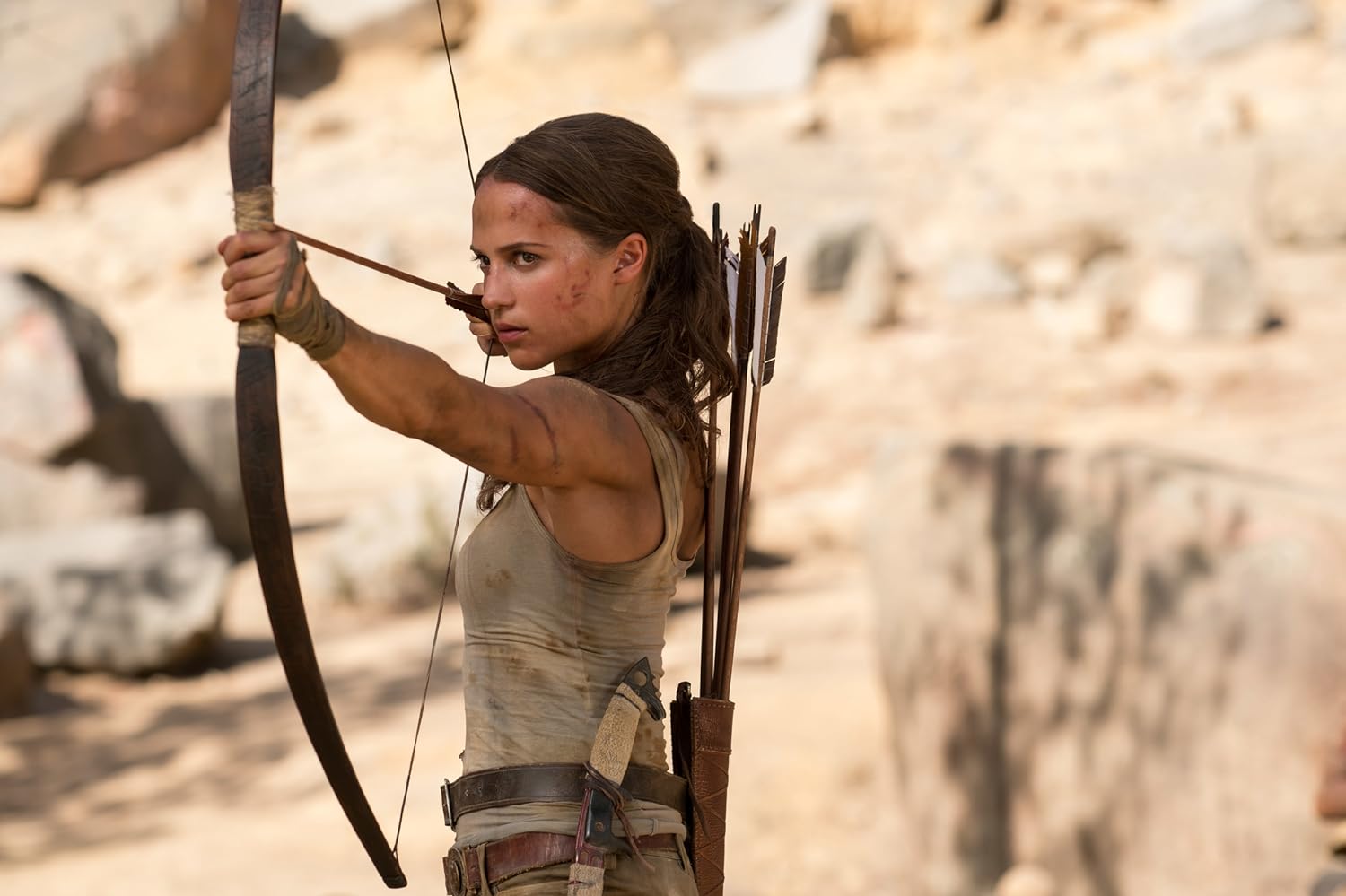
Alicia Vikander in Tomb Raider. Image courtesy Warner Bros.
For the last few years I've done a best of list to cap off a given year, along with a special spot dedicated to the worst movie. As 2018 ends, I wanted to try something a little different and instead give some final attention to movies that won't garner a lot of attention in 2019 and beyond. These are movies that don't stand out this year, films you'll skip over while browsing through Netflix, HBO GO, or Amazon Prime. Some are big budget flops that won't deliver a sequel, some are good movies that just can't find an audience, and others are missed opportunities.

Before we pour one out for the forgotten flicks of 2018, here's a short list of some of the best and worst 2018 had to offer.

Highlights: Thoroughbreds, Black Panther, Tully, Spider-Man: Into the Spider-Verse, First Man

Lowlights: Death Wish, Fifty Shades Freed, Pacific Rim: Uprising, Jurassic World: Fallen Kingdom


Uncle Drew

Kyrie Irving in Uncle Drew. Image courtesy Lionsgate.
What is it? A continuation of Kyrie Irving's Pepsi Max commercials starring the eponymous old baller.

Is it good? Nope.

Is any of it memorable? Watching Irving dribble is always a treat. Chris Webber was clearly having a good time, and Tiffany Haddish is always fun. There's not much more to say about this movie otherwise; Irving isn't much of an actor, and the plot is uninspired.


The Sisters Brothers

Joaquin Phoenix and John C. Reilly in The Sisters Brothers. Image courtesy Annapurna Pictures.
What is it? A neo-Western about greed, friendship, and dedication to family.

Is it good? Very much so.

Is any of it memorable? The opening scene is efficient, brutal, and sets the tone for the rest of the movie. John C. Reilly and Joaquin Phoenix show great camaraderie as the titular siblings, and the film continually defies genre expectations. It's a really, really good Western, which sort of dooms it to be ignored.


Life of the Party

Melissa McCarthy in Life of the Party. Image courtesy Warner Bros.
What is it? A modern take on Back to School starring Melissa McCarthy.

Is it good? Not at all.

Is any of it memorable? Maya Rudolph earns a few laughs for being herself. Gillian Jacobs and Heidi Gardner play characters who belong to a way more interesting movie than this. McCarthy's talents are wasted in this movie, which is particularly strange given she and her husband, Ben Falcone, wrote it.

Skyscraper

Dwayne Johnson in Skyscraper. Image courtesy Universal Pictures.
What is it? Dwayne Johnson's take on Die Hard.

Is it good? Unfortunately no.

Is any of it memorable? Just Johnson's performance. This is all the more disappointing considering even his lesser movies offer some redeeming value.


I Feel Pretty

Amy Schumer in I Feel Pretty. Image courtesy STX Films.
What is it? A send up of body swap movies starring Amy Schumer.

Is it good? It's pretty bad.

Is any of it memorable? Aidy Bryant and Busy Philips get a lot from underwritten roles. The premise is clever, with potential for both high comedy and pointed social criticism. It doesn't deliver though due to a mix of poor directing, an unclear premise, and precious few jokes for Schumer.


Tomb Raider

Alicia Vikander in Tomb Raider. Image courtesy Warner Bros.
What is it? A reboot of the Tomb Raider series, with Alicia Vikander as Lara Croft.

Is it good? It's fine.

Is any of it memorable? A couple of the fight sequences are solid. Vikander shows promise as an action heroine. The idea behind watching Croft grow into her eventual role as an iconic adventurer is interesting. With a better script (one that adhered more closely to the video game) and stronger direction this could have been a pretty spectacular action flick.

Friday, October 5, 2018

Sisters Brothers a ponderous, existential Western

Joaquin Phoenix and John C. Reilly in The Sisters Brothers. Image courtesy Annapurna Pictures.
There ain't much that moves fast in The Sisters Brothers. Aside from the rapid gunfights and the trigger fingers of its stars, the movie mostly takes its time to set up the action, drifting from scene to scene with a simple, logical flow. Sometimes the wandering begins to feel more like meandering, but The Sisters Brothers mostly takes fully advantage of the time it gives itself, telling a philosophically heavy story about family and dreams complete with violence and some wicked dark humor. 
 
John C. Reilly and Joaquin Phoenix star as the eponymous siblings/legendary Oregonian gunslingers Eli and Charlie, respectively. They work for the wealthy, powerful, and mysterious Commodore (Rutger Hauer), who sends them on a mission to kill chemist Hermann Kermit Warm (Riz Ahmed), a pseudo-prophet with ambitions of building paradise in Dallas. Assisting the Sisters is detective John Morris (Jake Gyllenhaal), who becomes entranced by Hermann's message, humility, and abundant love of humanity. Hermann and John travel to San Francisco in search for gold, although Eli and Charlie pursue them relentlessly. Along the way the Sisters must overcome nature, alcoholism, and a rival gang of bounty hunters under the orders of the powerful Mayfield (Rebecca Root).

Despite a fairly action packed and dramatic opening, The Sisters Brothers is far more about the adventure of the journey than the mission. It's an existential trip through the woods of Oregon and California, with discussions ranging from fathers and horses to changing the world one commune at a time. Director Jacques Audiard, who wrote the adaptation alongside Thomas Bidegain, effectively winds the clock and lets the characters stumble into profundity and self discovery. For a Western in which brains and blood splatter everywhere, The Sisters Brothers spends significant time pondering the meaning of the violence.

All of the malaise results in The Sisters Brothers suffering from a notable genre malady. Westerns aren't known for telling stories quickly; the preference is to mosey toward a conclusion, minimizing the urgency to keep the audience in the same mindset as the characters. There isn't much else to do in the woods besides talk and think. When done well it's a great, often engaging cinematic technique, especially for movies with ambition and a lot of characters to corral. Sisters Brothers lingers a little too long in the second act though, going from an easy pace to a crawl before the calamity that ensues in the final act. Given the plot's lack of direction, a little more urgency transitioning from act two to act three would have done wonders for the film.

The issue is less of a true fault than an annoyance, because even with the slowdown the movie offers more time spent with the eponymous siblings. Charlie and Eli have a relationship that's equal parts destructive and supportive, enabling their very worst behaviors but saving each other from ever being too far gone. Charlie's a dangerous drunk, but Eli is around to keep him upright and on the horse. Eli is lonely and lacks the social ease of his brother, but Charlie is around to keep an eye out for his older brother. Reilly and Phoenix have a brilliant rapport with each other that makes their squabbles and bonding believable, and The Sisters Brothers gives them ample room to grow their relationship. 
 
At the same time, the film uses their discussions to contrast their wants and desires. Westerns are often driven by ambition, spurred from the historical pursuit of gold, opportunity, and the allure of the American Dream. As a result of fulfilling their Manifest Destiny, Westerns often reward characters for their ambition, emphasizing the theoretically heroic nature of the quest in which the wilds must be tamed. But unbridled ambition is a dangerous thing, luring otherwise smart and logical people to pursue quixotic schemes while ignoring the dangers of the situation, as is the case with Sisters Brothers. Charlie, John Morris, and Hermann seek greatness at the cost of their personal being, not caring about the potential for disaster.

Then there's Eli. Even though he is considered the lesser Sisters, Eli has the simplest, most direct vision of his life. He seeks neither fame nor fortune, but instead just wants a life with a small farm, a shop, and his brother at his side. Sisters Brothers shows him the greatest favor, because he is generally sweet and kind even amid his murderous sprees. Eli does his job very, very well, but he views it as a means toward a peaceful life. Even toward the end when the dynamic flips and Eli gains control the film prevents him from going too far, because this film isn't about the big dreamers like Charlie, Hermann, or John. It's about folks like Eli, whose wildest dream is the simplest life.

Review: Four out of Five Stars

Click here to see the trailer.

Rating: R
Run time: 121 minutes
Genre: Western

tl;dr

What Worked: Story, Dialog, Themes, John C. Reilly, Riz Ahmed

What Fell Short: Pacing of the second act

What To As Well: High Plains Drifter, Dead Man