Friday, February 23, 2018

Annihilation tense and terrifying

Natalie Portman in Annihilation. Image courtesy Paramount Pictures.
Annihilation comes ever so close to being a brilliant piece of science fiction. The movie is a fascinating existential thriller overloaded with tension and hopelessness to go along with its strange creatures and otherworldly locale. It has a lot to say about the mind, body, and soul, but it loses itself when it speaks as often as it does without allowing the wonder to creep in. Instead of inspiring thoughts and allowing the imagination to go wild, Annihilation tries to control the conversation, much to its detriment.
Words convey only so much for a science fiction movie; exploration in every sense of the word is of greater importance. To his credit, writer/director Alex Garland's, who adapted the eponymous novel, has the structure for the type of adventure needed for Annihilation to succeed. Garland keeps things simple with the story, trimming the novel to focus on five women assigned to explore a great unknown hiding behind a strange shimmering wall. Four of them (played by Jennifer Jason Leigh, Gina Rodriguez, Tessa Thompson, and Tuva Novotny) are assigned to investigate the source of the shimmer that is constantly consuming more and more land. The fifth, Lena (Natalie Portman), enters to find out what happened to her husband (Oscar Isaac) and to atone for her past misdeeds. It's just five women, walking through a new world where things are just close enough to normal to seem familiar, yet are still miles away from being normal. And it doesn't take long for things to start falling apart.
Annihilation reaches into the basic fears people have about themselves and their identities and brings those fears right in front of the viewers' eyes. The body horror is rendered more terrifying by the existential crisis surrounding Lena and her comrades. They become lost to something greater than they are, begin to lose the little things that make them human, which in turn makes them, and the audience by extension, even more confused and frightened. What they discover is the horror of the great unknown, the absence of certainty and the uncontrollable shifts in their being that breaks them down from the inside out. It makes for an intense movie, and Garland cranks the suspense up to around a 12 by the middle of the second act. Annihilation becomes really, really uncomfortable right around the time when the really bad things begin to happen to the protagonists, and it gets downright frightening in one really discomfiting scene in which nature attacks with shrieks and wails and teeth and nails. Twenty years ago that scene would have led to numerous nightmares on my end; now it'll be just a night or two of bad dreams.
That scene is followed by an explanation for the cause of the fear, and the definition is somewhat terrifying in its own right. But it is part of a larger struggle Garland has with Annihilation and balancing how much of an explanation he owes to the audience for the movie's oddities. In lieu of showing and implying, Garland has characters speak often in exposition for the audience's benefit, which results in emotional removal from the oddities taking place on screen. The problem extends to the narrative structure, which greatly reduces the urgency and ambiguity Annihilation strives to attain. It undercuts the film's best parts; the deterministic moments when the characters trudge forward with the same amount of uncertainty as the viewer
Garland ultimately shoots himself in the foot by keeping viewers at least a step or two outside of the world he built, although that might have been a little intentional. For a Sci-Fi movie about an uncontrolled mutation the visualization is a bit lackluster. Annihilation depicts an Earth slowly but surely morphing into something more alien but still slightly connected to the human world. Yet the film's environment doesn't feel overly alien because viewers are not indoctrinated into the bizarre terrestrial version of our planet. Annihilation is so consumed by its explanations it fails to bring viewers along with it into the great unknown. Only the characters are allowed to get lost in this world; the audience is stuck watching from a few miles away from the safety of their seats.
It's difficult not to wish for a little more out of something as outright weird and perturbing as Annihilation. With a better sense of wonder, this movie would be magnificent instead of just interestingly bizarre.

Review: Four out of Five Stars
 
Click here to see the trailer.

Rating: R
Run time: 115 minutes
Genre: Sci-Fi

Ask Away
Target audience: Sci-Fi fans and people who were really into Ex Machina.

Take the whole family?: This is way too eerie and bloody for kids.

Theater or Netflix?: Theater isn't vital, but it's definitely worth a matinee trip.

How scary is this movie?: It isn't quite traditional horror, but the overarching vibe is terrifying. The scene referenced in the review is bothersome on many levels, as are the fates of a few of the characters. People who are bothered by jump scares and more traditional frights will be fine; it's the folks who overthink movie universes who will receive a spate of bad dreams.

Watch this as well?: Annihilation shares a few similarities with Apocalypse Now, with both targeting the thin line between sanity and mayhem. There are also a few similarities with John Carpenter's The Thing, which is always great to watch.

Friday, February 9, 2018

Fifty Shades series ends with risible Freed

Dakota Johnson and Jamie Dornan in Fifty Shades Freed. Image courtesy Universal Pictures.
After three movies steeped in banal naughtiness and moderately tawdry acts, it's hard not to feel a little let down by the Fifty Shades cinematic experience. A trilogy that could have been wicked fun and trashy was tamer than it should have been, burdened by a strange chastity unbefitting a series rooted in sex. Fifty Shades Freed doesn't end the franchise on a sour note – it's far too poorly made to be fully boring – but it does continue the series' habit of finding an uninteresting way to present its salacious content. For a franchise about love and relationships, it’s surprisingly short on passion.
Fifty Shades Freed is at least efficient in setting the viewers' expectations. It takes around five minutes for Ana (Dakota Johnson) and Christian (Jamie Dornan) to get married, go on a whirlwind honeymoon, and commence in the first of many, many sex scenes. Only a few minutes later and the film brings back the franchise's villain Hyde (Eric Johnson) and lobs in its first stupidly laughable scene. That's pretty much how the rest of the movie goes. Fifty Shades Freed has a wash, rinse, repeat style to it: Christian and Anastasia get into some asinine argument; reconcile; have sex; get stalked by Hyde; have sex; get into another argument; get stalked again by Hyde; even more sex; and so on. As the film progresses the sequences serve as justifications for showing yet another “scintillating” scene with Christian, Anastasia, a pair of handcuffs, and a random toy from their closet, at least until the last act when all the drama comes to a lackluster fruition, the filmmakers suffering from a severe case of performance anxiety.
Most of this movie is a tease. The sex scenes tease something bold and risque, yet are served as a tame fantasy that falls short of their romance-novel roots. The nudity is gratuitous but incomplete, one shot coming ever so close to a full reveal of Christian Grey before pulling right back up. The drama has aspirations for trashy goodness, but are execute poorly enough to make them inappropriate for daytime soap operas. Fifty Shades Freed sometimes comes tantalizingly close to being interesting, only to veer back to being terrible.
The problems with this movie are all over the place. From bad cinematography to bad acting to a bland soundtrack to some really poor directing by James Foley (whose career includes two Fifty Shades movies and, surprisingly, the great Glengarry Glen Ross), Fifty Shades Freed falls short in every category. The easiest fail to point out though, what brings Fifty Shades Freed to the edge of Wiseau, is a remarkably terrible script by Niall Leonard (with a hat tip to book writer E. L. James). Every basic rule of scriptwriting is ignored or failed at. Dialog often contradicts itself and the events on screen, character motivations change for the sake of changing, the plot exists as a loose concept of a story that advances itself largely by accident. That the movie eventually ends comes as something of a surprise considering how many scenes are elongated or even inserted to hit the 105 minute mark. The poor writing really hits the characters the hardest though. Hyde remains an incomplete villain, a person who is evil for the sake of being evil. The extended Grey family and the one friend in Anastasia's life provide nothing of value to the narrative. And Christian and Anastasia remain unfulfilled characters, people whose motivations for life and for their marriage are frustratingly incomplete. After three movies covering some unclear expanse of time (I remain completely confounded by the timeline in the Fifty Shades series), neither of them has really grown as a character. Despite making what appear to be some compromises, Christian still always gets what he wants, subjugating Anastasia because he can. Anastasia flashes hints of rebellion, only to willingly become owned emotionally by Christian; it's remarkable that she even has one friend who is not related to Christian. None of this makes for a healthy relationship, despite how earnest the movie is at trying to justify it as such.
Fifty Shades Freed is bad, but in a risible fashion. There was a fair amount of open laughter during some of the more ridiculous moments, the audience recognizing and appreciating the absolute brilliance of the movie's incompetence. Not much about this movie is good, but it gets a minor pass for eliciting a few chuckles and not being a completely dire experience.

Review: One and a half out of Five Stars

Click here to see the trailer.

Rating: R
Run time: 105 minutes
Genre: Romance

Ask Away

Target audience: The folks who've read the books and watched the other two movies.

Take the whole family?: Considering the lion's share of the movie is about sex, it's probably best to just hire a babysitter if you want to go out.

Theater or Netflix?: Or don't see it at all.

Can anyone in these movies act?: Ignoring the way too good for this Marcia Gay Harden, Dakota Johnson is the best thing this franchise has going for it. Despite the role's severe limitations, Johnson still shows flashes of charm and craftiness with Anastasia.

Watch this instead?: I watched Before Sunrise the night before this, which is an infinitely better movie about romance between actually interesting people.

Friday, January 12, 2018

Phantom Thread finds ugliness in beauty

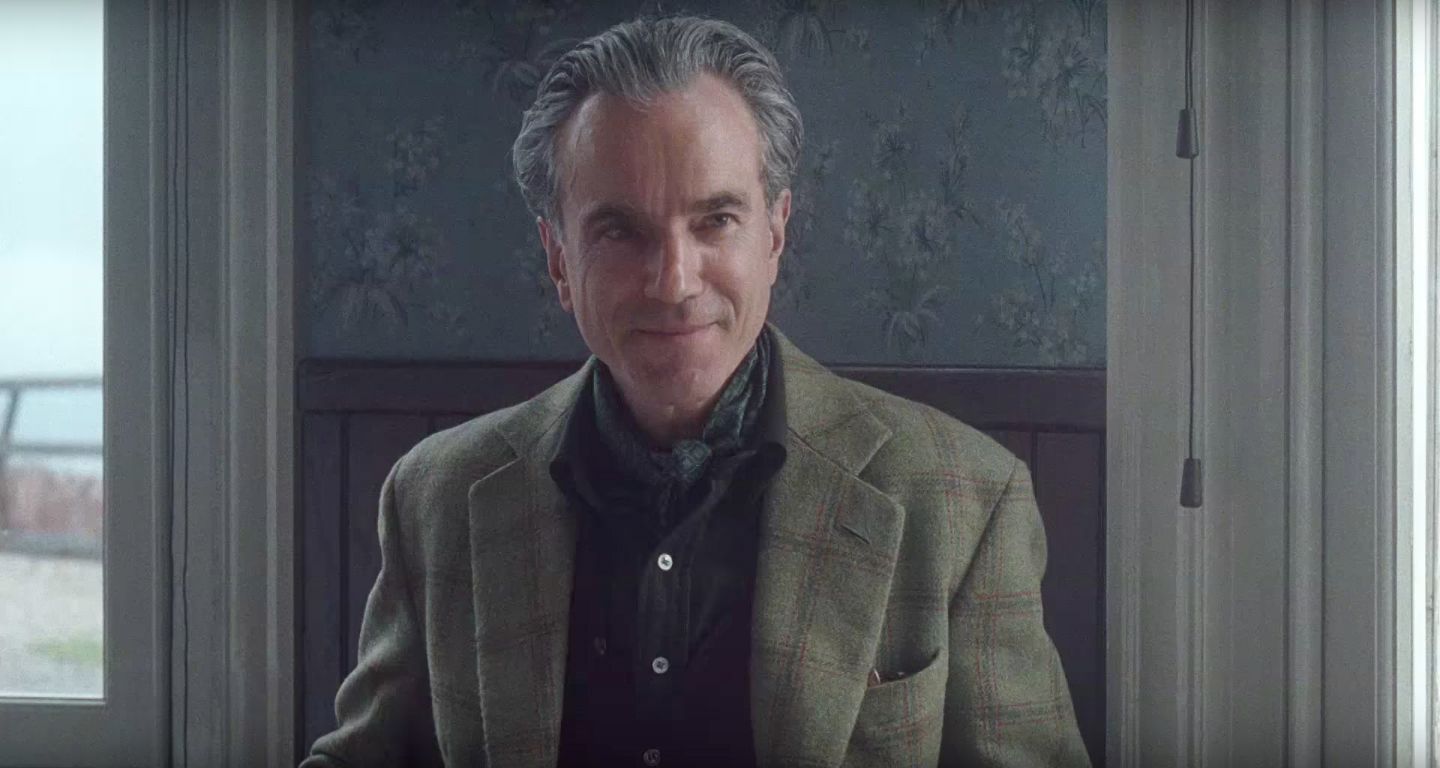
Daniel Day-Lewis in Phantom Thread. Image courtesy Focus Features.
One of the fun parts of seeing a movie in a theater is overhearing the general thoughts and critiques of other people shortly after the movie. Their opinions are fresh and strong, lacking restraint or any consideration for those who participated in the making of the movie. It's so much fun to hear how people completely love or completely hate a movie. I bring this up because the opinions for Paul Thomas Anderson's newest film, Phantom Thread, were much more negative than positive. People found it boring and confusing, a waste of the zero dollars they spent to see the early screening. And I understand why people wouldn't find the movie as interesting or, frankly, enchanting, as I do. It's a movie that's difficult to fall in love with, but people who do fall for Phantom Thread fall real hard.
Falling for Phantom Thread's means looking beyond the movie’s fine and ornate nature. Anderson has designed every little detail to the point where little passion or excitement exists within the movie. A spurt of anger courtesy Daniel Day-Lewis' well-regarded dress designer Reynolds Woodcock comes across as a shock, because it is legitimately surprising that anyone in this movie has that much fire in them. Most of the film is about avoiding direct conflict; any attempt at an argument are either shot down immediately by Reynolds' sister Cyril (Lesley Manville) or coded beneath general British mannerisms. Even the spark brought by young muse and paramour Alma (Vicky Krieps) is mostly subdued and tied to her comparatively quirky behavior. There is a scarcity of sparks that fly for a love story as ill fated as this one.
And yet the ones that do go off, whether its Reynolds' brief dip into emotion or Alma's eventual breakdown, are more effective because they contrast so greatly against Phantom Thread's reserved tone. Fitting the London milieu, what's said is often far less important than the method of the delivery, and especially the looks that accompany it. Alma is far too quiet to confront someone when she feels slighted, but she is willing to introduce herself forcefully to get her point. Her anger is thunderous, but buried deeply beneath social expectations that it requires a tremendous effort to express. There's so much Alma wants to say, but she's often better served finding unique methods of resolving professional and/or relationship problems. Reynolds has little issue saying whatever comes to mind, employing some particularly cruel barbs to the people around him in a quiet, passive-aggressive fashion. Why so many women fall in love with the aging, fussy, cold man is one of Phantom Thread's endearing questions that Anderson answers in a very dark fashion. Despite his bluster, Reynolds is a weak creature, prone to childish acts and crippling depression, a needy being obsessed by a long lost mother. Aided largely by the standard great performance offered by the tremendous Day-Lewis, Reynolds is a fascinatingly ugly character, too vain and particular to be endearing but captivating nonetheless.
Much of Phantom Thread occurs beneath the surface and spirals down from there. Every dress Reynolds makes has a hidden secret sewn in, every character has their own motives for their often selfish actions. Beneath the film's beautiful exterior and glamorous clothing is ugliness and deceit, whether its from Reynolds cruelty or the conditions the women work in to construct their products. The romance between Alma and Reynolds is undercut by insecurity and vanity, with love a secondary motive for their engagement. Hidden within the ugliness and bouts of insanity is a little bit of tenderness and sweetness. The torture Alma and Reynolds put each other through is not rooted in desire or any honest sense of love, but by a mutual necessity for themselves. They each serve the requirements of the other, and the relationship sort of works because of it. The little touches of gentleness almost offset the thematic darkness and the bizarre circumstances surrounding Alma and Reynolds.
Phantom Thread takes a long time to unravel the way it should, and the episodic narrative is difficult to navigate, enough to dissuade people from sticking around until the end. It's a difficult film to watch and become invested in; a person as morally hideous as Reynolds is difficult to stomach, even if he's played by Day-Lewis. But the journey Anderson takes through Reynolds' ego and Alma's possessiveness is tantalizing and engaging,and the performances and cinematography are brilliant. Rarely will something so ugly look this stunning.

Review: Four and a half out of Five Stars
Click here to see the trailer.

Rating: R
Run time: 130 minutes
Genre: Drama

Ask Away
Target audience: Viewers who are really, really into Paul Thomas Anderson movies.

Take the whole family?: It's best to hire a babysitter and leave the kiddos at home, or stream later in the night.

Theater or Netflix?: Interesting enough for the theater, but waiting for it to stream is just fine as well.

Academy Award odds?: Apparently pretty great. It wouldn't be too surprising for Anderson to pick up at least a writing nod and Daniel Day-Lewis to get nominated for Best Actor. It would be great if Lesley Manville got some recognition for Best Supporting Actress as well, and the movie will likely get a Best Picture nomination.

Watch this as well?: The last collaboration between Anderson and Day-Lewis, There Will Be Blood, is a classic. It's also a little reminiscent of Federico Fellini's great 8 ½.

Thursday, December 28, 2017

The best (and worst) movies of 2017

Image courtesy Disney
Two thousand seventeen was a pretty solid year for movies. This is the first year the number of films on the worst list were outpaced easily by some pretty great choices on the best film lists, enough to require knocking off some really lovely movies from this list. What's left is a collection of reality altering indie movies, a tremendous horror movie, and a great movie about the frailty of marriage.

The films below are all ones reviewed from 2017. I kept the list to the top six to focus on the films most worth a second look, leaving out some wicked good selections. Just missing this year's list are Star Wars: The Last Jedi, Baby Driver, American Made, and Ingrid Goes West. 

Image courtesy Cohen Media
No. 1: The Salesman

Winner of the Best Foreign Language Film at the 2017 Academy Awards, The Salesman is a gut punch of a film about how a happy and fulfilling marriage can fall apart from obsession and anger.
Writer/director Asghar Farhadi uses a performance of Death of a Salesman as a backdrop for a story about a man who simply cannot let things go, despite the protestations of his wife. Moving on is an impossibility for a prideful person, one who is awful enough to use an attack on his wife as a means of taking control of the marriage. What was once a partnership devolves into something much darker, and The Salesman makes that transition hurt.

Image courtesy A24
No. 2: The Florida Project

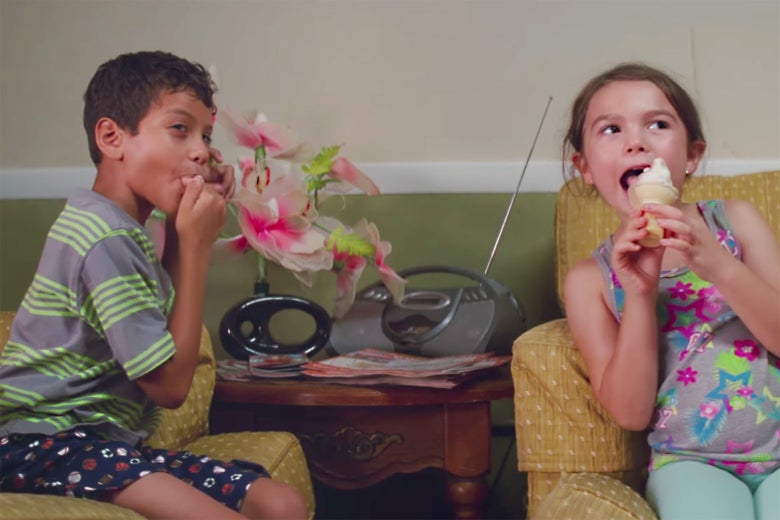
The Florida Project is happily heartbreaking. It's a movie about the innocence of childhood and the need/desire to escape the sadness of the circumstances people are stuck under. The small family at the center of the movie doesn't have much going for them besides each other, and even that isn't enough to make for a sustainable lifestyle.
Buoyed by a wonderful performance by Willem Dafoe, The Florida Project succeeds at the small things that make childhood memorable, like making sandwiches with friends and pretending a firework show is just for you. Even the cruelty of reality that strikes at the end can't prevent the movie from engaging in one last flight of fancy, to provide at least a glimmer of a happy ending before everything falls apart.


Image courtesy Universal Pictures
No. 3: Get Out

Writer/director Jordan Peele is clearly a student of horror, knowing exactly what tropes to invert and which ones to follow to make Get Out a terrifyingly bleak look at the black experience in America. Peele swings a mighty strong hammer, explaining why a seemingly bucolic upper-class neighborhood can be a place of discomfort and fear from a certain viewpoint, as even the most welcoming of environments has an underlying evil to it.
Get Out is brilliant for many reasons, but the film succeeds at the most basic component of horror; making viewers feel uncomfortable and frightened. It's a horror movie that succeeds at scaring the audience for the frights it produces and for the thoughts it invokes.

Image courtesy Fox Searchlight
No. 4: The Shape of Water

Certainly the strangest film on this list, The Shape of Water is also the purest and sweetest love story to come out in many, many years. The film shows how powerful love can be, and how easily it can be taken away by the evils of man

The Shape of Water doesn't stray too far from writer/director Guillermo del Toro's history, inserting supernatural elements while undercutting the rosiness of bygone eras. This film layers on the romance more than he has in the past, putting the emphasis on the story of two awkward beings finding each other. That the central couple is a mute woman (a great performance from Sally Hawkins) and a fish creature makes it all the more interesting.

Image courtesy Warner Bros.
No. 5: Dunkirk

Dunkirk is the most efficient war movie to come out in the last two decades. Telling three intertwining stories in less than two hours, director Christopher Nolan gets at the desperation and despair found amid the young men trapped on a beach waiting for either death or a miracle.
What makes Dunkirk so remarkable is the tension that builds from the first moment through the end. Nolan keeps his foot on the gas, replicating the real life experience at Dunkirk and never providing his soldiers, or the viewers, a moment of true comfort. The reach of danger is never too far away, and even a celebratory round of jelly and tea can come to a crashing halt with a well-placed explosion.


Image courtesy Disney
No. 6: Coco

Coco is a pretty glorious animated movie. It's fluffy, brightly lit exterior is gorgeous enough to draw kids into a story about the inevitability of death and the uncertainty waiting in the afterlife.
A hallmark of good children's entertainment is how cleanly and directly it addresses complex and often said issues. Coco simply excels at just that, not just through the honest conversation about death, but the fear of becoming forgotten completely by time. The film treats it as a sad eventuality, a fact of life that is, ultimately, okay. Everything has to end somehow, and Coco provides a little cheeriness to that fact.

Image courtesy Warner Bros.
Worst film: Fist Fight

Even if this wasn't a perfect year for movies, there were still very, very few movies that could qualify as outrageously bad. Only seven films ended up on my worst films list, which is a drop from years past. With hindsight some of those selections aren't overly painful either; King Arthur: Legend of the Sword has a couple of decent sequences, and The Mummy comes close on occasion to being kind of fun. The Bye Bye Man is a train wreck, but still more fun to watch than the drivel spewed by Transformers: The Last Knight.
Two films battled neck and neck to be the year's worst. The Snowman came in a super close second – almost nothing goes right for that movie – but it lacks the loathsome factor that makes Fist Fight the absolute worst movie of 2017. Fist Fight takes no advantage of what is on paper a pretty stacked cast – Charlie Day, Tracy Morgan, Jillian Bell, Dean Norris, and Kumail Nanjiani should go off somewhere and make their own comedy – and has a loathsome plot to boot. Loathsome and irksome only wins at being awful, which is the best victory Fist Fight will manage.

Thursday, December 14, 2017

Last Jedi an unpredictable adventure

Daisy Ridley in Star Wars: The Last Jedi. Image courtesy Disney.
Star Wars as a franchise has always worked best when hope is challenged by impending darkness. Hope without challenge is meaningless; hope needs to be earned through tribulation to be worth a damn, the bleakness countered by faith in one's friends, allies, and one's cause. Star Wars: The Last Jedi favors that ambiguity, putting its heroes in a desperate situation, with only their hope and faith in one another and their cause to lean on. The film rarely provides assurances that the hope they have is justified, that it will result in a happy ending for all involved. It's also why this movie is the first Star Wars entry in three decades to feel unpredictable.
This is a very good thing. The new Star Wars needs to separate itself from 40 years of cinematic history to be worth anything going forward. The only way to continue producing interesting stories is to take risks, through a few curveballs into the very well-established formula and keep the audience guessing on how the fate of the Star Wars galaxy will go. The nostalgia that carried The Force Awakens (which earns justifiable criticism for aping A New Hope) and influences Rogue One won't last forever; younger audiences need their own characters to like. Instead of recreating what worked before, writer/director Rian Johnson takes a few chances with Last Jedi to take some ownership of the material and ensure this isn't a carbon copy of Empire Strikes Back.
Last Jedi shares a few traits with Empire Strikes Back, notably by showing the rebels in their darkest moment. Hope is really the only thing Resistance members Leia (Carrie Fisher, RIP), Poe Dameron (Oscar Isaac), Finn (John Boyega), Rose (Kelly Marie Tran), and Vice Admiral Amilyn Holdo (Laura Dern) have as they try to escape the evil First Order led by Supreme Leader Snoke (Andy Serkis), General Hux (Domhnall Gleeson) and Kylo Ren (Adam Driver). Hope is what pushes Rey (Daisy Ridley) to the ends of the galaxy to recruit the bitter Luke Skywalker (Mark Hamill) to the Resistance cause. Hope comes despite the Resistance being hopelessly outgunned by an impending force of destruction and despite little evidence that the soul of Kylo Ren can be saved from the dark side.
As the film makes clear, hope is a tough thing to hold onto. As the Resistance gets closer and closer to its destruction, its members have to be reminded frequently to maintain their hope and faith, to not succumb to the daunting odds mounting against them. Last Jedi is the rare Star Wars film to not adhere blindly to that sense of hope though; even for characters from a galaxy far, far away that aren’t technically human, it remains natural and vital even to question one's faith. Hope is put on trial, the characters weigh the faith they have in themselves, their friends, and their cause, and the process to a verdict is painful and dangerous.
Johnson does a lot of house cleaning in the two and a half hours of Star Wars time he has to work with. The puzzle box concept J.J. Abrams crammed into The Force Awakens is stripped away, to the great benefit of the franchise and for audiences frustrated by the that movie’s unnecessary ambiguity. The key mystery in that movie is granted a simple resolution that serves as a reminder of how greatness can come from even the humblest of beginnings. The victories earned by the Resistance are always Pyrrhic, good enough to render hope from but still damaging for a cause that can't afford to lose that much. The Last Jedi fights against the supposed goodness of the Jedi as well, doing more to question the wisdom of the Jedi Order than the prequels did in three movies. The Last Jedi makes a very convincing argument for ending the Jedi line; it's only Rey's hope in what the Jedi could accomplish that makes the Jedi Order possibly worth redeeming.
There remains some value in the old ways for Rey and the Star Wars franchise. Last Jedi posits a need for legends and heroes to inspire faith and hope to spur a rebellion against an unrelenting evil. The past is there to serve as a guiding light for the present, to give the new characters a path forward in the darkness as they find their own way toward salvation. As it is for the franchise too, which slowly but surely will separate itself from the past and find some hope of its own.

Review: Four out of Five Stars


Click here to see the trailer.

Rating: PG-13
Run time: 153 minutes
Genre: Science Fiction

Ask Away

Target audience: The legions upon legions of Star Wars fans who will make Disney a whole ton of money this month.

Take the whole family?: Families will bring their kids regardless because Star Wars, but this could bother some of the really young kids. The length might also turn them away.

Theater or Netflix?: The effects are more than good enough to deserve a cinema trip. Whether it's worth paying for the 3D and IMAX is up for debate.

Where does this rank on the Star Wars pantheon?: Last Jedi still doesn't hit the mark of either Empire Strikes Back or A New Hope. I do put it ahead of the prequels, The Force Awakens, and the very good Rogue One, and as an adult I find Last Jedi to be more interesting and complex than Return of the Jedi.

Watch this as well?: Enough of the Star Wars franchise is good enough to merit another watch, especially Empire Strikes Back. Also check out a couple of writer/director Rian Johnson's previous works, Brick and Looper.