 |
| Image courtesy Cohen Media. |
Looking through this list the one thing that strikes is the breadth of options to pick from. The top film is about five sisters struggling in Turkey, and the rest of the collection incorporates a punk band under siege, a pair of pretty great musicals with wildly different themes and presentations, and a profile of one of the saddest politicians in recent years. Depth and variety are great things to have when hitting up theaters, and 2016 brought a broad palate to theaters.
The films below are all ones reviewed from 2016. I kept the list to the top seven to focus on the films most worth a second look, which cut out a few rather good films. Movies missing the cut include The Neon Demon, Pete's Dragon, The Nice Guys, Rogue One, Hail, Caesar! and Everybody Wants Some! So below are the best films I reviewed this year, along with the absolute worst film I laid eyes on in 2016.
No. 1: Mustang
This one was actually nominated for Best Foreign Language Film at the 2016 Academy Awards, meaning that the film was up for competition among 2015 nominees. I'm keeping it though because the stateside release came in 2016 and to recognize it as the best film I've watched in the last 12 months.
Mustang is a tender and melancholy look into the lives of five sisters being thrown into marriages with little to no choice and a lot of implied violence. There is a hint of fatalism and a lot of danger if things go wrong, but in the end the little victories are what matter in this film. Mustang lifts and drops viewers on such a frequent basis that the relatively positive ending feels like rapture.
 |
| Image courtesy A24. |
Director Jeremy Saulnier's follow up to his terrific revenge film Blue Ruin shocks viewers with its sudden bursts of violence between lulls of peculiar black humor. It's tough to find a film this balanced and this effective at what it wants to do; keep the audience on edge and with little clue of what’s really going on.
Despite the oddity of the premise – a punk band led by Anton Yelchin stumbling into a Neo-Nazi murder in the middle of the woods – everything feels natural and logical, the acts of violence ramping up in a strangely grounded fashion. This is one of the better horror films in recent years too, featuring one of the scariest boogeymen to come along recently in Patrick Stewart's Neo-Nazi leader Darcy.
 |
| Image courtesy Lionsgate. |
No. 3: La La Land
A probable front-runner for a ton of awards, La La Land keeps its soulful analysis of the divide between romance and ambition hidden just underneath a sunny, musical surface. The cheeriness does just enough to disguise the film's true theme – although those sometimes sneak in through the lyrics – and the result is a complex, enchanting musical.
Writer/director Damien Chazelle deserves credit for folding in the tenants of musicals of the past – the big numbers and those little flirty bits of dancing – into a modern setting and doing so in a smooth, logical fashion. That Ryan Gosling and Emma Stone are both charming as all hell and showcase a rather engaging rapport just adds to La La Land's many charms.
 |
| Image courtesy IFC Films. |
No. 4: Weiner
Somehow this film became even more noteworthy in the months after its release. The film didn't predict Anthony Weiner's role in the 2016 election, but it set the table for how the man could muck up enough to become entangled in that morass of awful.
What makes the film so engrossing is watching Anthony Weiner fall apart over the course of a few months and the tragedy of the self-inflicted crash. He is depicted in Weiner as a politician with his heart at least close to the right place, so his second fall from grace impacts a whole lot of people outside of himself and his family. The documentary ably captures his failings, his inability to handle his faults, and the fact that his personal foibles sink any chance of his message catching on.
 |
| Image courtesy Fox Searchlight. |
No. 5: Jackie
Jackie is the film I hope proves to people that Natalie Portman is a terrific actress. She absolutely nails a difficult performance, being a woman who must show a pretty and calm face to the nation and still have enough verve to fulfill the legacy of her husband.
Even though Portman is the heart of Jackie, the film is strong enough independent of her performance to remain a worthwhile experience. It offers one of the more interesting glimpses into the John F. Kennedy legacy, playing around with the concept of Camelot while pointing out why that ideal was seized upon by the public. Kennedy's election came at a difficult time in American history, so a little romanticism worked to assuage the fears of the voters while pushing for vital changes.
 |
| Image courtesy Disney. |
No. 6: Moana
This film and the next are pretty close to being toss ups, but I liked Moana a little bit more than the next one. For one thing, it has a great performance by the unfairly charismatic Dwayne Johnson, and that tends to push many films up a level or two.
Moana's real selling point though is the eponymous princess who takes decisive action to save her people even against the recommendations of her father. Even though the film sets things up to have her be Mad Max to Maui's Furiousa, it makes a quick and effective shift that is logical and important. Add that to some terrific vocal performances (particular Johnson and Auli’i Cravalho) and killer songs courtesy Lin-Manuel Miranda and the result is a wicked good animated film.
 |
| Image courtesy Disney. |
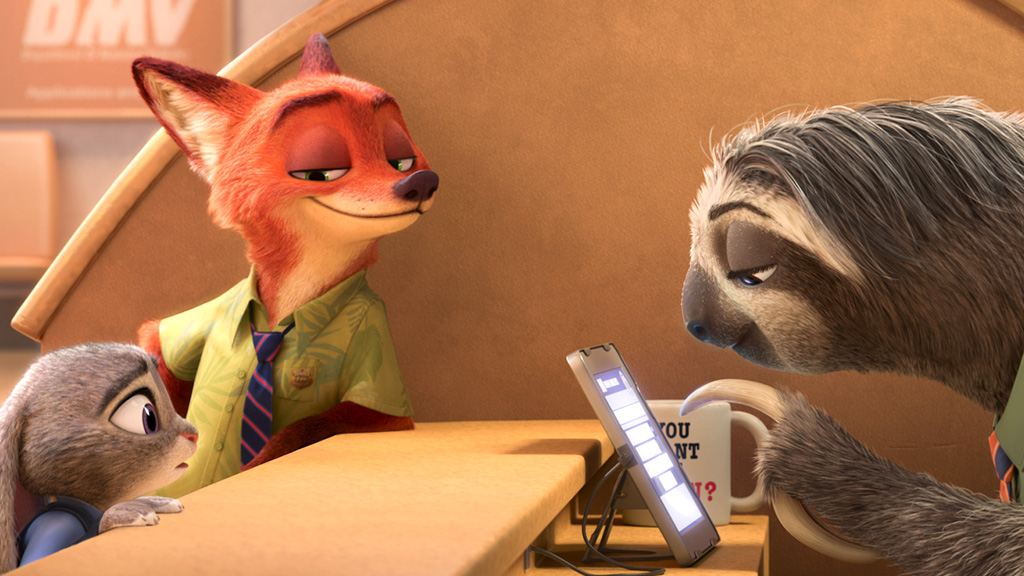
No. 7: Zootopia
Like Moana, one of Zootopia's main selling points is a complex message delivered in a bright, often rather humorous fashion. This film addresses racial stereotypes and how easily those characteristics become ingrained in societal fabric, an important topic given how easy it is to ignore or miss such biases. The film doesn't offer any definitive answers, but it at least works as a gateway for understanding the issue and inspecting one's own biases.
The message wouldn't really work without the rest of Zootopia's charms, as it has so many jokes and clever references it is worth watching just on the surface level. Adding depth to it just makes for a more interesting and rewarding viewing experience.
 |
| Image courtesy Lionsgate. |
Worst film: Norm of the North
The fun thing with this year's contenders for the worst film was the depth of the terrible. Batman v Superman: Dawn of Justice suffer from a terminal case of dourness and some tremendously asinine plot twists. Patriots Day is an insensitive, dumb film about a complicated moment Boston history. Dirty Grandpa has the great Robert De Niro at his nadir, while films like Sing and Zoolander 2 are obnoxious at best.
None of those films though fail on the same level as Norm of the North. This animated monstrosity is ugly to look at and is lacking narrative cohesion, talented voice actors (the awful Rob Schneider is the headliner), and any coherent themes. This film is a garbage dump of an animated flick that insults the intelligence of its young target. At least it seems to have drifted away from public eye in the last 12 months, fated to rest in the depths of online streaming services for some unlucky soul to stumble upon.

