Showing posts with label Mad Max: Fury Road. Show all posts

Wednesday, November 23, 2016

Moana is better than your average Disney princess

Moana and Maui in a scene from Moana. Image courtesy Disney.
The most enjoyable part of the Moana screening didn't come while watching the film, but shortly thereafter while waiting in line to pick up a cellphone. In line were a few women talking excitedly about it, their excitement peaking with the fact that the eponymous female Disney character with royal roots has not one but two living parents. While on the outset it seems like an odd thing to consider, Disney has a historically nasty habit of using dead parents (or the illusion of that in the case of Tangled) as plot points to build female characters from. It's a cheap way of creating the ideal strong, female character, a figure that can overcome the worst loss and succeed with a slew of despites in her way. That Moana didn't resort to killing the lead character's parents is an appreciated change of pace for the folks who grew up frustrated by that pattern.
Better still, the filmmakers didn’t need to do it to prove their central figure's bona fides as a character. Moana, voiced by newcomer Auli'i Cravalho, is shown immediately as a courageous soul who embraces the dangers of the unknown. She’s drawn immediately to the tale her grandmother (Rachel House) tells about cocksure demigod Maui (voiced by the unfairly charming Dwayne Johnson) and is lured by the adventure the legend promises. Life is waiting for her at sea, albeit one conflicting with her status as her island's next queen, a role her father (Temeura Morrison) and mother (Nicole Scherzinger) push her toward through a catchy Lin-Manuel Miranda tune. The tension of the situation could be resolved through a sad song by Moana before the great adventure serving as the film's drawing point begins. But Moana doesn't take the easy route with its decision, instead having Moana see her value on the island and only leave as a means of saving her friends, showing the leadership she exhibits in one song without abandoning the promises she just made in it. The concept is a fairly complex one, and it reveals just a shade of the traits and portrayal, both in the writing and in Cravalho's performance, that make Moana such an interesting, deep character to pull from.
Her role underlines how much of Moana is devoted to women, whether it’s Moana (who pulls off most of the successful feats of daring as Maui watches), her mother, her grandmother, and the island Moana and Maui adventure off to resurrect to save the island. The film even pulls off a third act twist to realign the narrative to fit the concept and emphasize the film's feminine bent, switching up the prophecy at the film's heart to a nuanced resolution that fits the film's themes perfectly. This isn't exactly unknown territory for a film to take, but it remains nice to see Disney at least continue to broaden its characterization of its female characters that has taken the company from comatose damsels to clever and competent seafaring leaders.
Moana's thematic depth extends beyond female role changes to rip into trite narrative shortcuts. This is the kind of film that uses the concept of The Special – the one character destined to be Neo or Harry Potter or Superman – as a plot point and as a way of criticizing the concept at the same time with the idea of fate being limited by free will. In the filmmaker's eyes, a savior has to decide to be one even if the actual ocean itself anoints that person for the role. Moana has a habit of undercutting tropes – Johnson's Maui makes a few cracks about Disney princesses – but this one is the sharpest rebuke and the one that has the most resonance, or at least is taken most seriously by the filmmakers.
Moana is worthy of respect for its layers and intelligence, but it earns its keep through a rather fun plot that excels in its simplicity. There's nothing overly complicated about the hero's journey, and the filmmakers throw in the right level of levity, homages (among them a rather goofy one to Fury Road), Miranda songs and Dwayne Johnson to make the whole experience sing. Add that to some gorgeous animation and you have a pretty strong case for the best animated film of the year. At the least, it is good enough to please a fan base eager for Disney to catch up with the times.

Review: Four and a half out of Five Stars

Click here to see the trailer.

Rating: PG
Run time: 113 minutes
Genre: Animation

Ask Away

Target audience: Families and people who want a Disney protagonist with two living parents.

Take the whole family?: One sequence is a little intimidating, but overall this should be acceptable for kids ages 5 and up.

Theater or Netflix?: Theater is cool for this one. I'm not entirely sold on the need for 3D though; the regular format was gorgeous as is.

What of the short film at the beginning?: It's OK. Called Inner Workings, the short features the internal struggles the protagonist's mind has with the rest of the body to figure out what's in the best interest of the human. There's enough humor from the awkwardness of the brain tugging along the heart, stomach and other organs to keep everything in line, although the final message is a little heavy-handed. The best of the recent batch of shorts remain 2012's brilliant Paperman.

Watch this as well?: Just about everything from Disney's recent run of good to greatness is worthwhile, but I'm going to step away from the Mouse and recommend another terrific animated film that rips holes into narrative tropes and has an infectious score to boot: The Lego Movie.

Wednesday, December 30, 2015

The best (and worst) from 2015

Charlize Theron in a scene from "Mad Max: Fury Road." Image courtesy Warner Bros.
Theater going in 2015 was a very, very satisfying experience. Audiences could pick from a little of everything this year and find stellar options, whether it was an action epic, an animated tearjerker, a wonderful romantic comedy masquerading itself as an Oscar flick, or a thrilling peek into the drug trade. Every genre was well represented and included at least one excellent selection to choose from. And, as with any year, there were a few dregs as well, one of which is much worse than the others.

All of the below are films I reviewed for this year, which knocks out the gripping documentary “Going Clear.” I also kept it to the seven films I thought were worth highlighting, but these other flicks deserve at least a mention: “The Big Short,” “Furious 7,” “Crimson Peak,” “Suffragette,” “Bridge of Spies,” “Me Earl and the Dying Girl,” “Dope,” “Love & Mercy,” “The Second Mother,” “The Walk” (as seen in theaters) and “The Stanford Prison Experiment.”

No. 1: “Mad Max: Fury Road”

Just an outstanding, astonishing movie that’s nothing less than an action masterpiece. The continuation of the post-apocalyptic adventures of Max Rockatansky (now played by Tom Hardy), George Miller's fourth installment took 30 years to come to fruition, and it was worth the wait. Miller's vision – a fair use of the word given how much creative control he has on this – goes old school on the effects, limiting the CG and crashing as many cars in the desert as he could.
“Fury Road” is a marvelous movie to watch and a wonderful film to think about. Many articles have analyzed the film's feminist bent, but it is worth emphasizing how every female character in this film is more heroic than their male counterparts, whether in battle like Charlize Theron's iconic Furiousa or finding the courage to leave an abusive situation as the wives do. As the film implies, it was the men destroyed the world; it's up to the women to save it.

Image courtesy Disney/Pixar.
No. 2: “Inside Out”

I cried once the first time I watched this. I cried twice when I went to see it again. Any film that evokes that kind of reaction is a lock to make it into the top five.
“Inside Out” hits the beats of the best Pixar film, putting the right voice actors (Amy Poehler, Phyllis Smith, Mindy Kaling, Bill Hader and Lewis Black) inside the mind of a preteen girl undergoing the greatest shift in her young life. Moving across the country is scary and intimidating, no matter how much Poehler's Joy tries to imbue her charge Riley (Kaitlyn Dias) with positivity. Joy learns how valuable Smith's Sadness is to Riley's life, how valuable she is to the girl's continued emotional evolution, and the film portrays that journey of self-discovery in a way that's silly and heartbreaking. Plus I still haven't gotten over the fate of poor Bing Bong (voiced with desperate pride by Richard Kind). 


Image courtesy Open Road Films.

No. 3: “Spotlight”

One of the frontrunners to win Best Picture at the 2016 Academy Award ceremony, “Spotlight” is the least cinematic film on this list. There's nothing flashy about it aesthetically; the office walls are white and drab, the clothes are toned down, the streets of Boston are shot as if the city is crumbling around the characters. Then again, the absence of cinematic grandiosity fits the film's workmanlike theme of people plugging away to get to the bottom of a complicated, horrifying cover up perpetrated for decades by the Catholic Church.
The staff of the Boston Globe's eponymous investigation unit (played by Michael Keaton, Mark Ruffalo, Rachel McAdams and Brian D'Arcy James) are single focused on their job, putting the story and, most importantly, the victims above themselves. Plus, the acting is  thoroughly terrific, especially Stanley Tucci as an attorney for several victims. “Spotlight” is good journalism, and it practices exactly what it preaches.

Image courtesy The Weinstein Company.
No. 4: “Carol”

Christmas is rarely as beautiful and melancholy as it is in “Carol,” which documents the early stages of a romance between Cate Blanchett’s Carol and Rooney Mara’s Therese. Their rapport is a strange, based little on spoken words and more on those little moments like the soft touches and the tender stares they share. The film even goes out of its way to show how the two talk to other people far more often than they do each other, perhaps because the conversation only gets in the way of the spark they share.
“Carol” is a beautiful film to watch in large part because of the way director Todd Haynes frames the 1950s era, yet the aesthetic loveliness is belied by an ugliness of the era directed at the central pair’s relationship. “Carol” contrasts itself frequently like that and plays around with expectations and filmmaking techniques, framing certain moments as dreamy fantasies while mocking a well known writing convention. The result is a portrayal of a dizzying romance that takes its time to reveal the inevitable.

Image courtesy Lionsgate.
No. 5: “Sicario”

“Sicario” is simply intense, the kind of film in which breathing becomes a near impossibility during a few key sequences. As depicted in the film, danger is a constant presence for all involved in the drug war, along with the people who just happen to live in cartel area.  Director Denis Villeneuve never lets the audience have a moment to breath; something bad could happen within that half second between inhalation and exhalation.
It's a shame this film isn't getting the level of Oscar attention it deserves. Villeneuve and screenwriter Taylor Sheridan do a tremendous job invoking an atmosphere of fear and mistrust – a feat that often goes unrecognized during Award voting – and the performances by Emily Blunt and Benicio Del Toro are top notch. Hopefully “Sicario” at least gets a nod for Roger Deakins' cinematography efforts; if anything the film illustrates how beautiful the region could be, and how ugly the drug wars have made it.

Image courtesy A24.
No. 6: “Room”

Speaking about crafting an intense sequence, “Room” director Lenny Abrahamson created one of the most frightening moments of the year when Jacob Tremblay's Jack tries to escape the only place he's ever known. That's what makes the moment effective, as Abrahamson frames the escape through Tremblay's eyes, making the outside world a large, ominous and alien place.
The film's highlight though is star Brie Larson as Ma, who has spent seven years trapped in the eponymous place by kidnapper/rapist Old Nick (Sean Bridgers). Larson is simply stellar, convincingly oscillating between strength and weakness when the time calls for it. Her moments with Tremblay are a delight, which makes the scenes in which she starts to fall apart all the more shocking. It's the best performance of the year, regardless of gender.

Image courtesy Twentieth Century Fox.
 No. 7: “Brooklyn”

“Brooklyn” is the best romantic comedy to come out in a very long time, a smart, sweeping story of a woman discovering what she wants for herself and fighting to get it. It's easy to see the dilemma Saoirse Ronan (who is fantastic) faces with the two men courting her, as both of her beaus treat her with respect and love. There is, however, one significant difference between the two, and that difference is the one Ronan eventually recognizes and fights for.
The film succeeds because of how it lays out her internal journey, and it is unexpectedly funny as well. Nick Hornby's dialogue is crisp, clear and laser focused, and “Brooklyn” benefits greatly from Ronan and a supporting turn by Julie Walters as the sharp tongued Mrs. Kehoe. This film evokes a fair number of smiles between the moments when it pummels with sadness.

Image courtesy Universal.
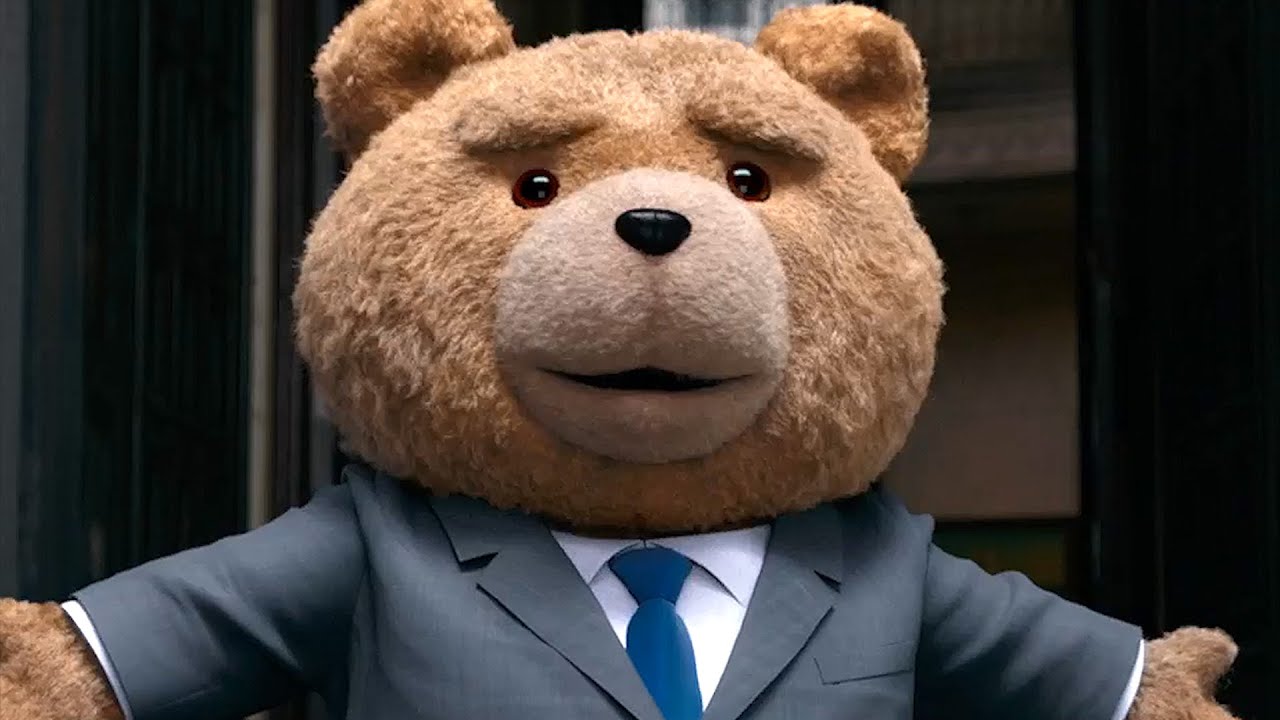
Bottom of the barrel: “Ted 2”

There are quite a few contenders for this title. “Truth” is frustrating and ire inducing but is redeemed slightly by Cate Blanchett's performance, and Dakota Johnson similarly counters the suck that is “Fifty Shades of Grey.” “The Boy Next Door” is too silly and dumb to be offensive, while “Insurgent” and “A Walk in the Woods” are bad in a forgettable fashion.
That leaves “Ted 2,” a risible piece of garbage with few laughs and an obnoxious streak a mile long. Director Seth MacFarlane, who also voices the titular stuffed animal, has crafted a perfectly offensive, misogynistic and cruel film film whose comedy is derived from laziness. Those problems are exacerbated by leads MacFarlane and Mark Wahlberg, whose characters lack anything resembling likability. That’s kind of a problem considering their relationship is, supposedly, the heart of the entire film.