Showing posts with label Luke Evans. Show all posts

Friday, March 17, 2017

Beauty and the Beast offers stale retelling of tale as old as time

Beast (Dan Stevens) and Belle (Emma Watson) in Beauty and the Beast. Image courtesy Disney.
There are a number of problems plaguing the live-action version of Beauty and the Beast in theaters today, but the totality of the film’s issues is summarized in one simple statement: This movie never justifies a reason to exist independent of the original. There are a few differences in this one when compared with the 1991 animated classic, some character changes and a fattened up run time to make it appropriate for these sorts of adaptations. None of it, though, offers a significant artistic reason for Disney to reboot Beauty and the Beast. It  banks on nostalgia to ride through some placid waves of mediocrity, trading excellence for subpar exchanges.
The troubles start from the get-go with a retelling of the tale of how a young prince (Dan Stevens) and his loyal staff (consisting of Ewan McGregor, Ian McKellen, Emma Thompson, Audra McDonald, Gugu Mbatha-Raw, Nathan Mack and Stanley Tucci) receive the curse that turns them into the titular Beast and a collection of personified furniture and knickknacks. It's a longer rendition than the animated one, acted out by the characters in a way that does not align with the voiceover narrative going on at the moment. That points to the heart of the problem with 2017's Beauty and the Beast; you the story doesn’t change, it just has more to it at a lesser quality. More is somehow less and yet still the same.
So what do audiences get with the extra 45 minutes of screen time with Beast, Belle (Emma Watson), Garcon (Luke Evans), LeFou (Josh Gad) and the kooky servants of the decrepit castle? They receive more backstory explaining why Beast is as he is (the reason is a dead mother, because Disney can't not have a dead parent). They find out why Belle's father (Kevin Kline) is a single father (the reason is yet another dead mother). They get a few more songs thrown in, none of which hold a candle to the exceptional numbers ported over from the original. They have more time to discover plot holes and think about how weird it is to eat from a spoon that was a person. They generally get useless content that provides no greater understanding of Beauty and the Beast. That is, except, for one change concerning the characterizations of Beast and Garcon. This version widens the personality gap between the two, turning Beast into a curmudgeon instead of a cold-hearted brute and cranking up Garcon's villainy to cartoonish levels. Beast is now a misunderstood loner, while Garcon is the jock who takes the bullying several steps beyond what is reasonable. I can understand the motivation to avoid the moderate similarities of the two characters found in the first Beauty and the Beast that gives some logic to Garcon’s actions, but the way the result pushes it so far to the other end the narrative arcs get bumped away in the process. All of that focus on those two leaves little else for poor Belle to do but sit and watch as the men fight. There are 45 more minutes to work with, and the filmmaker couldn't spare additional time to add depth to Belle’s story.
The most distracting thing about this Beauty and the Beast is the visual divide between Watson's Belle and the CGI rendering of Stevens' Beast. The characters never look quite right standing next to each other, the poor quality of Steven's CGI character clashing greatly against Watson. A few action scenes in particular make Beast look like a meh video game character as he leaps awkwardly from one spire to the next like a drunk King Kong. It kills any sense of verisimilitude between the two characters, putting one in a real world while banishing the other to a computerized realm.
Aside from all that, there are precious few differences between the 1991 Beauty and the Beast and its 2017 followup; it has almost everything the original does, but done slightly to largely worse. This new version isn't capable of standing on its own, nor does it seem to want to be anything beyond a real version of the animated classic. Riding on coattails is an OK strategy for financial success – and it will probably do more than fine at the box office – but a terrible one for earning a cinematic legacy.

Review: Two out of Five Stars

Click here to see the trailer.

Rating: PG
Run time: 129 minutes
Genre: Fantasy

Ask Away

Target audience: People who have really, really fond memories of the original.

Take the whole family?: A few scenes get a little heavy, but on the whole the material is safe enough for kids.

Theater or Netflix?: Just wait for it to come to you and avoid the price gouging.

What up with LeFou?: There's apparently been a decent amount of hubbub over Josh Gad's LeFou, who is apparently gay per Gad. Despite some shouting from certain countries, the movie minimizes his character’s sexual orientation and makes it largely a non-issue. The only scene that offers a direct indication of LeFou’s sexuality lasts for about five seconds and is nowhere near salacious. There is almost nothing to any of this, because Disney prefers to stay well within the boundaries of social progression.

Watch this instead?: Go dig out the DVD of the original and watch it a few more times.

Friday, October 7, 2016

Girl on the Train wastes talent, time

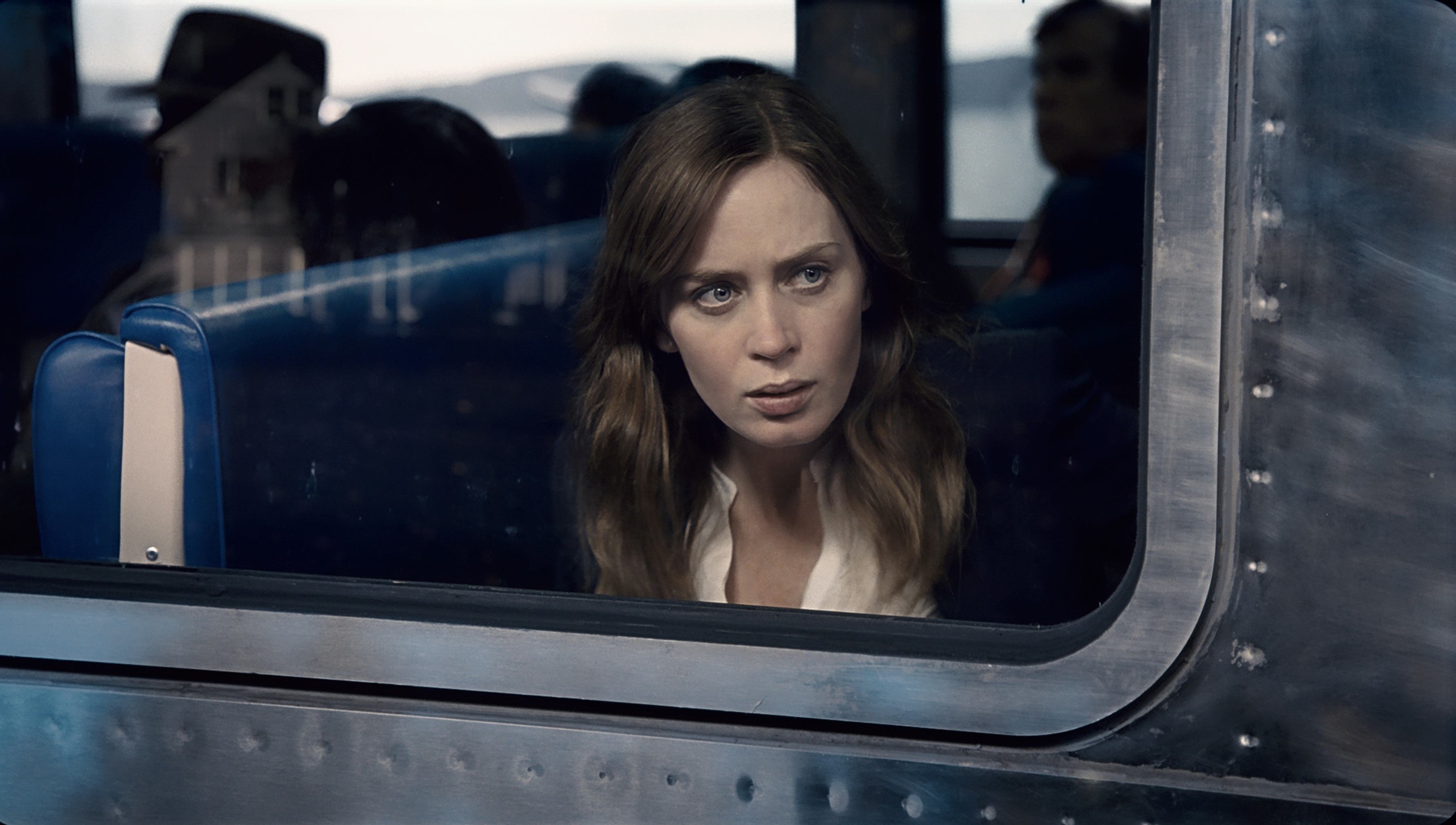
Emily Blunt stars in The Girl on the Train. Image courtesy Universal Pictures.
The Girl on the Train opens with the eponymous commuter Rachel (Emily Blunt) declaring in a voiceover that she has an overactive imagination. The point of the line and the others that spill out from Rachel’s mind during the opening is to put the viewer inside the unfiltered mind of the film's featured character while revealing her unreliability as a narrator. That she immediately stops telling the story is a problematic approach to the set up, as the film shifts away from her eyes to incorporate the stories of token housewife Anna (Rebecca Ferguson) and the soon-to-be missing Megan (Haley Bennett) to connect the three women to one singular narrative. It essentially took less than five minutes for this film to defeat the purpose of its introduction, along with much of the intrigue of its existence.
Alas, this isn't an unexpected flaw in a film full of them. The Girl on the Train is a silly little blunder that tries ever so hard to be lurid and dangerous but comes off instead as an above average Lifetime film with a hint more steaminess. Its central mystery is easy to resolve once the main players – the three women along with characters played by Luke Evans, Justin Theroux and Edgar Ramirez – are introduced and settled in. It features mediocre to subpar performances – even the oft great Blunt can't make the material work in her favor – and misused moments from the usually sublime Lisa Kudrow and Allison Janney, along with some perfectly preposterous dialog. The scenes are shot cold and distant as a film like this could be, but the movie lacks quality cinematography and the aesthetics are those not belonging to a film with this wide of release. Everything is so serious, and the tone is so poorly established, the movie sets itself up to be glorious camp, especially whenever Theroux enters to snack on scenery. The Girl on the Train would be a much more entertaining film had the filmmakers followed Theroux’s example and inserted a smirk in every scene.
What's truly weird about the whole experience is the heavy emphasis on motherhood among the three female characters and how the concept of being a mother effectively defines their femininity. All three women are influenced by a child in some capacity, be it having one, losing one, or being unable to conceive at all, and their personalities are tailored to what level of ability they have for it. The only one of the three granted any perception of happiness is the one willing to trade her independence and hope to be with a monster to raise her child; the other women are depicted as incomplete and empty.  The concept is inherently regressive and dehumanizing (although it does result in the best bad line of the film) and the extremes the filmmakers take it is disturbing. The Girl on the Train effectively punishes characters for their failures as mothers through characterization (Blunt's Rachel as a morose alcoholic) and through physical pain as the film progresses. That the film could serve as a criticism for society's blame in these categorizations is moot considering how often the film luxuriates in Rachel's sadness and the pain wrought to the other women.
Blunt's Rachel is the source of many of The Girl on the Train's ailments. As the key to the mystery of the missing woman, the film uses her alcoholism as a way to obfuscate the mystery while faulting Rachel for not doing more to stop the crime she eventually solves. It would work in a Memento fashion if the film constructed the narrative around her and the memories she can't recapture as it teases a possible violent streak aroused during her states of inebriation. But the incorporation of the other women and their stories negates the impact of her lost memory and the possibility of her being the person responsible for the disappearance. The audience isn't required to trust Rachel to understand the story; rather, viewers watch her stumble about and wait for the memories of the night in question to reappear again and indicate the most logical candidate for the crime. (On a side note, the film does a rather poor job employing red herrings.) Watching an alcoholic stumble through an investigation is less interesting than interpreting his or her lost memories, and the film never seems to capture this, or any concept, it aims to depict.

Rating: Two out of Five Stars

Click here to see the trailer.

Rating: R
Run time: 112 minutes
Genre: Thriller

Ask Away

Target audience: Those who read and love the book.

Take the whole family?: The “R” rating is fair enough, so stick with that and keep the kiddos at home.

Theater or Netflix?: Stream to pair it with a low-priced pinot grigio.

Does this pass the Bechdel test?: I had this discussion with a woman who came with me to see it, and we couldn't really come up with a solid answer for it. Despite the film centering on three women, their discussions are either about a man or an issue related to a man. The closest the film gets to not having that discussion involves conversations Lisa Kudrow has with other women about bad restaurants, and those are more background noise than anything. That the film apparently elicited a description as a “sausage party” overheard by my fellow moviegoer underlines the aforementioned issue.

Watch this instead?: Every time I see Justin Theroux, I want to watch Mulholland Drive or Inland Empire. And because I always recommend Mulholland Drive, you should also sit down and watch Memento to see how a film can effectively work with a memory lapsing protagonist.