Thursday, April 18, 2019

Horror hard to find in The Curse of La Llorona

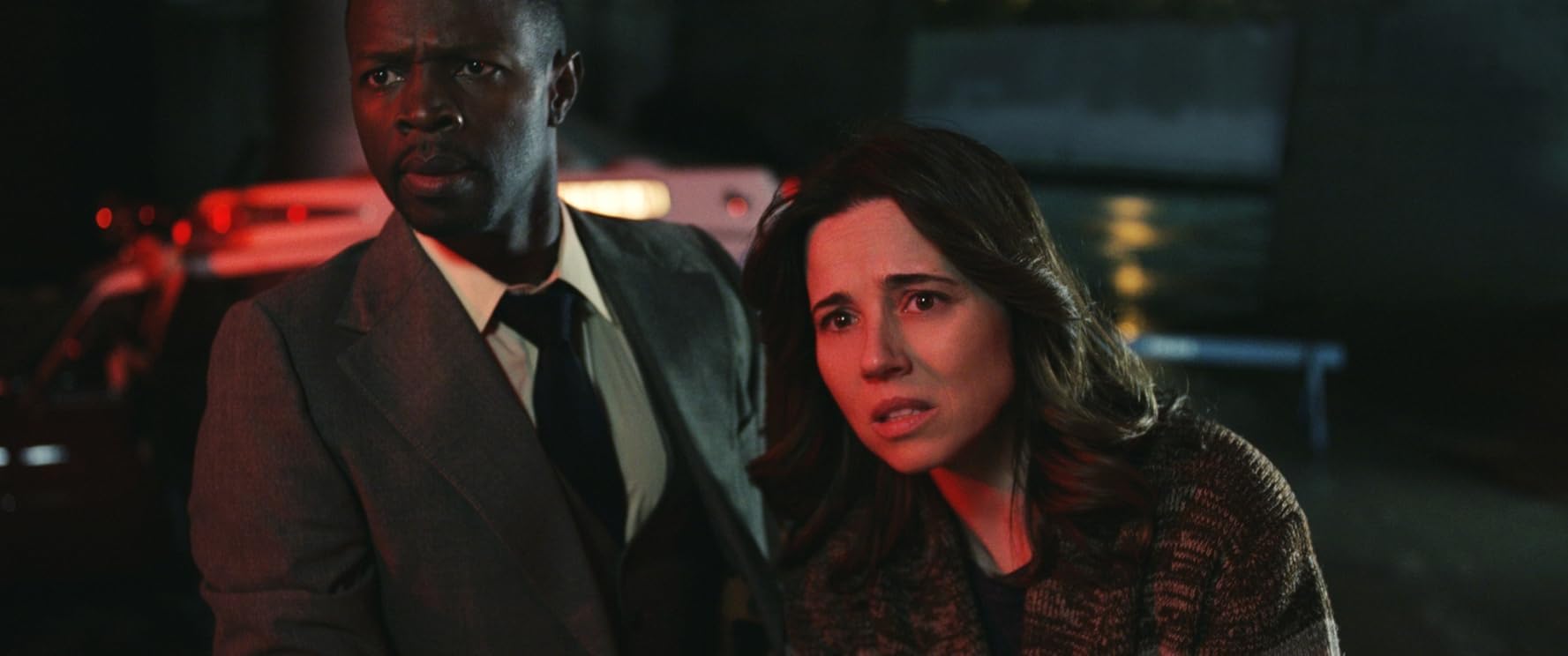
Sean Patrick Thomas and Linda Cardellini in The Curse of La Llorona. Image courtesy Warner Bros.
The Curse of La Llorona has a brilliant concept for horror. It's a ghost story about a woman whose spirit is filled with unfathomable sadness. Her eternal despair turns into a desire to start over again and again, abducting other children from their mothers only to repeat the same tragic cycle again and again and again. The idea is elegant in its simplicity, touching directly on a number of fundamental fears of both parents and children. Despite all of that, La Llorona can't find the horror in its own premise, churning out a movie whose only saving grace is its accidental risibility.
 
La Llorona is rooted in a bit of Mexican folklore. As the movie tells it, the eponymous spirit (played by Marisol Ramirez) discovers her husband cheating on her and drowns her children to punish her husband. Once she realizes what she's done, the woman begins an eternal quest to replace her children with other children, only to drown them. Forward a few centuries to 1973 and the spirit of the weeping woman takes the children of single mother Patricia (Patricia Velasquez), partly because of the actions of Child Protective Services worker and single mother Anna Tate-Garcia (Linda Cardellini). Out of spite, Patricia prays for La Llorona to take Anna's children (Roman Christou and Jaynee-Lynne Kinchen), and the spirit begins to haunt the Garcia family. Anna calls upon the help of former priest Rafael (Raymond Cruz) to fend off the ghost and save her children from a rather dark fate.

La Llorona doesn't understand why the folklore is as effective as it is. The attempts at horror in this movie are less elemental and more artificial, centering on jump scares and underwhelming CGI design to shock the senses. What's missing is some profundity to the horror, something that seeps below quick jolts that puts the proverbial chills through a person's spine. There's no terror coming from the situation Anna finds herself in, no reflection of the struggles Anna has as a single mother. The film even goes out of its way to incorporate a nuclear family – Rafael serves as father figure – into the film's resolution to take away some of Anna's agency as a parent. Any terror that might exist happens around Anna, but it never emanates from her.

Absent vital atmosphere, La Llorona banks a lot on numerous jump scares, those quick little moments that give viewers a little jolt of fear, for its horror. For this to work the jump scares have to be pretty darn close to perfect, hitting audiences like a cannonball to the gut. This is not the case for La Llorona. At best the scares are predictable, easy to see from miles away and often caused by a remarkably stupid decision from one of the characters. They are about as poorly done as a jump scare can be, completely ineffective at providing even the smallest goosebumps from forming. Then again, the eponymous ghost herself is a poor source of horror. Showing the ghost throughout the film – and she gets a lot of screen time – puts a lot of effort on the filmmakers to make that vision truly terrifying. But La Llorona as depicted in this film is far more silly than scary. Her appearance is clumsy and awkward with little effort given to make her seem properly bothersome. One of her first major scenes, an attack on a couple of children, is tremendously ridiculous, goofy enough to suck any terror out of the fact that children are literally about to die. La Llorona also sadly one note, the complexities of her story removed for a simple creature that chases after children and has trouble with doors. Sympathy for her plight is a potential source of horror – it results in a lot self reflection from audiences – but that seems to be too complex of an idea for La Llorona to implement.

This film's one real saving grace is it's dedication to seriousness. La Llorona tries so, so hard to be scary it comes across as pretty hilarious. Poor character decisions run rampant in this film, as do some horribly tacky dialog and unconvincing line reads. It's not a so bad it's good, but this film is kind of a hoot to sit with people who call out the main characters for their idiocy or start laughing at how bad the jump scares are. The best way to watch a bad movie is with people who are really into it, morphing what could be pain into a communal experience. Everyone gets to laugh together, and that's about the best thing La Llorona has to offer.

Review: One and a half out of Five Stars

Click here to see the trailer.
 
Rating: R
Run time: 93 minutes
Genre: Horror

tl;dr

What Worked: Concept.

What Fell Short: Jump Scares, Ghost, Acting.

What To Watch Instead: Babadook, The Devil's Backbone

Friday, April 12, 2019

Little can't overcome its premise

Marsai Martin in Little. Image courtesy Universal Pictures.
Appreciation for Little requires a pretty long look beyond the premise. Because the premise is silly and not meant to be taken too seriously, yet the movie leans on it so heavily to deliver laughs the thing basically breaks midway through the second act. Little does have a couple of things going for it, notably a pretty good cast, but once the premise stops being funny and starts becoming tedious there isn't much left to say about it.

Little stars Regina Hall a wicked wealthy software developer Jordan Sanders. Jordan's success stems from a drive to become important and spurn anything good in her life, including sweet love interest Preston (Tone Bell). Jordan also makes her employees' lives miserable, especially her mousy assistant April (Issa Rae). That is until the day 13-year-old Stevie (Marley Taylor) casts a spell to turn Jordan little again. The next morning Jordan wakes up as her 13-year-old self (played by Marsai Martin), and is forced to relive her middle school years, befriends the school's nerds (JD McCrary, Thalia Tran, and Tucker Meek) in the process. Meanwhile, April has to run the business and prepare for a big pitch to the wealthy and oblivious Connor (Mikey Day). Shenanigans ensue.

Most of Little's humor comes from its premise. Watching Martin pretend she's actually a 39-year-old woman is fun for a little while – credit to her for going all in on the premise – but the joke eventually stops being funny, and the rest of the film's sense of humor is bothersome. The humor often came at the expense of the likable characters; the nerds are made fun of for being nerds, April is the target of fat jokes (which, what?), and Hall's Jordan makes a rather uncomfortable trans joke. This also might be one of the more pro-child abuse movies to come out in a long while, and perhaps the last to do so in a similar stretch. Little is quietly mean, the humor dedicated to knocking characters down and laughing at them. Hall, Rae, and Martin do their best to sell the jokes, with Martin and Rae having some pretty good patter, but they aren't given a lot to work with.

The film's best joke is a one-liner making fun of its own premise with an implied comparison to films like Big and 13 Going on 30. Unfortunately it invites that comparison to indicate why those other films make their gimmicks work while Little fails. The main reason is the storytelling, in particular the length of the main characters' respective journeys. Big and 13 Going on 30 spend weeks to months with their characters, giving them time to undergo personal growth before returning to their original lives. Little gives its main character just two days to find her epiphany and turn her life around. It's not enough time for the journey to stick, or for the lessons to feel earned; Jordan is effectively a tourist in her own narrative, never in any real danger of being stuck in her situation. This issue hits April as well, as she's given just two days to discover her self confidence. Both need more time to learn about themselves, and the film just doesn't give it to them.

Which is kind of odd considering the amount of time the movie has to work with. Instead of exploring the world it's built for itself, the writers (director Tina Gordon and Tracy Oliver) toss in multiple dance scenes that don't advance the plot. There's a lot of this fluff in Little, scenes that don't really carry the narrative or would lead to additional plot points but are ultimately dropped. At the same time there are a number of narrative gaps, things that happen that make little sense because the context was edited out. It feels like Little was just assembled incorrectly; the pieces were there, but the filmmakers didn't have a good understanding of the puzzle they were trying to solve.

Review: Two out of Five Stars

Click here to see the trailer.

Rating: PG-13
Run time: 109 minutes
Genre: Comedy
 
tl;dr

What Worked: Regina Hall, Issa Rae, Marsai Martin.

What Fell Short: Directing, Writing, Mean Spirit

What To Watch Instead: Big, 13 Going on 30

Friday, April 5, 2019

Sense of humor can't carry Shazam!

Asher Angel in Shazam! Image courtesy Warner Bros.
Shazam! is supposed to be the fun D.C. movie, the one where the humor is intentional and the characters aren't as dark as they have been in the last decade. It's designed to be the wink to the audience saying they, too, think things went a little too serious over the past 10 years. Shazam! is almost an apology, although a quick look through the pee jokes and hamming reveals the same mean streak that plagued the worst parts of the Snyder films.

Shazam! stars Asher Angel as Billy Batson, a foster child whose search for his mom gets him sent to a new home with the kindly Rosa (Marta Milans) and Victor (Cooper Andrews). His new family is a collection of quirky folks, from the enthusiastic hugger Darla (Faith Herman) to video game addict Eugene (Ian Chen) to the quiet Pedro (Jovan Armand) to college applicant Mary (Grace Fulton). Billy falls into a strange friendship with his new roommate and superhero enthusiast Freddy (Jack Dylan Grazer), who keeps finding ways to get into trouble. Billy ends up defending Freddy during one of those moments, resulting in a meeting with the mighty wizard Shazam (Djimon Hounsou). Somewhat desperate at the moment, the wizard Shazam gives Billy his powers, turning him into the super powerful hero, Shazam (Zachary Levi). Billy stumbles into acts of heroism shortly thereafter, but is soon pursued by the villainous Dr. Thaddeus Sivana (Mark Strong), who has a history with the wizard and an revenge against society on his mind. Billy has little time to learn about his complex powers as he defends Philadelphia from Sivana and the seven deadly sins.

Shazam! is a throwback, more akin to Adam West's Batman movie than the Ben Affleck or Christian Bale flicks. It sort of suits the character, a legendary boy scout who is a bit out of step with the modern teenager. Shazam as a character is something of a goofball, mildly dim-witted and often out of his element because of his super powers. Levi ramps up his character's goofiness to a degree that is nearly insufferable, but never quite crosses that boundary due in large part to his inherent earnestness. His sincerity is charming and sometimes endearing, aligning himself with the overarching silliness of the whole endeavor. And it's kind of realistic given the scenario the movie paints for him. Giving a 14-year-old brilliant powers and zero guidance will result in mayhem and mild disaster. When faced with an evil being with powers equal or greater than his own, his instinct is to run as far away as possible from the angry man with magic powers and a killer grudge. It's probably the best joke the film has going for it, the consistent inability for its hero to be heroic because he has absolutely no idea of what to do.

Yet the Shazam sections of Shazam! are also the least interesting aspect of the film. The superhero sequences have pretty much been done, with no visual flairs or execution to distinguish it from the rest of the genre. And the story of Billy Batson is far more engaging than the story of how Billy Batson turned into Shazam. That's due in large part to Angel, who gets a lot of mileage from a soft voice and a subtle sense of crushing disappointment in his life. There's a really excellent film in Shazam! centered solely on Billy Batson rediscovering his trust in his family, and Shazam! comes somewhat close to finding that movie. Throwing in Levi's silly antics diminishes that story, leaving a more generic superhero movie in its place.
 
The film is oddly regressive with its treatment of its female characters. The filmmakers make a really, really troublesome choice on how the film portrays Batson's mom, turning her into the biggest villain in the film. The film gives Sivana more justification to murder people than it does Batson's mom for making what should be a soul-crushingly difficult choice. Mary also gets a strange scolding for debating whether or not to leave her family to go to college. The film gives her room to be conflicted, but it paints the decision to better her future, and perhaps the prospects of her family, as the selfish choice.
 
Shazam! has a lot of these weird little choices in its story. Freddy does something incredibly stupid and selfish, and yet Billy is painted as the bad guy. Two high school jocks threaten to beat a child who needs a cane and no one bothers to help the kid. This movie's version of Philadelphia is less of a comic book version and more of an illogical one. For a movie that aims to be lighthearted and friendly, it's filled with an incredible amount of wanton cruelty.


Review: Two and a half out of Five Stars

Click here to see the trailer.
 
Rating: PG-13
Run time: 134 minutes
Genre: Action

tl;dr

What Worked: Asher Angel, Zachary Levi, Sense of Humor

What Fell Short: Story Issues, Sexism

What To Watch Instead: Spider-Man: Into the Spider-Verse

Friday, March 29, 2019

Dumbo's fun peculiarities overshadowed by poor storytelling

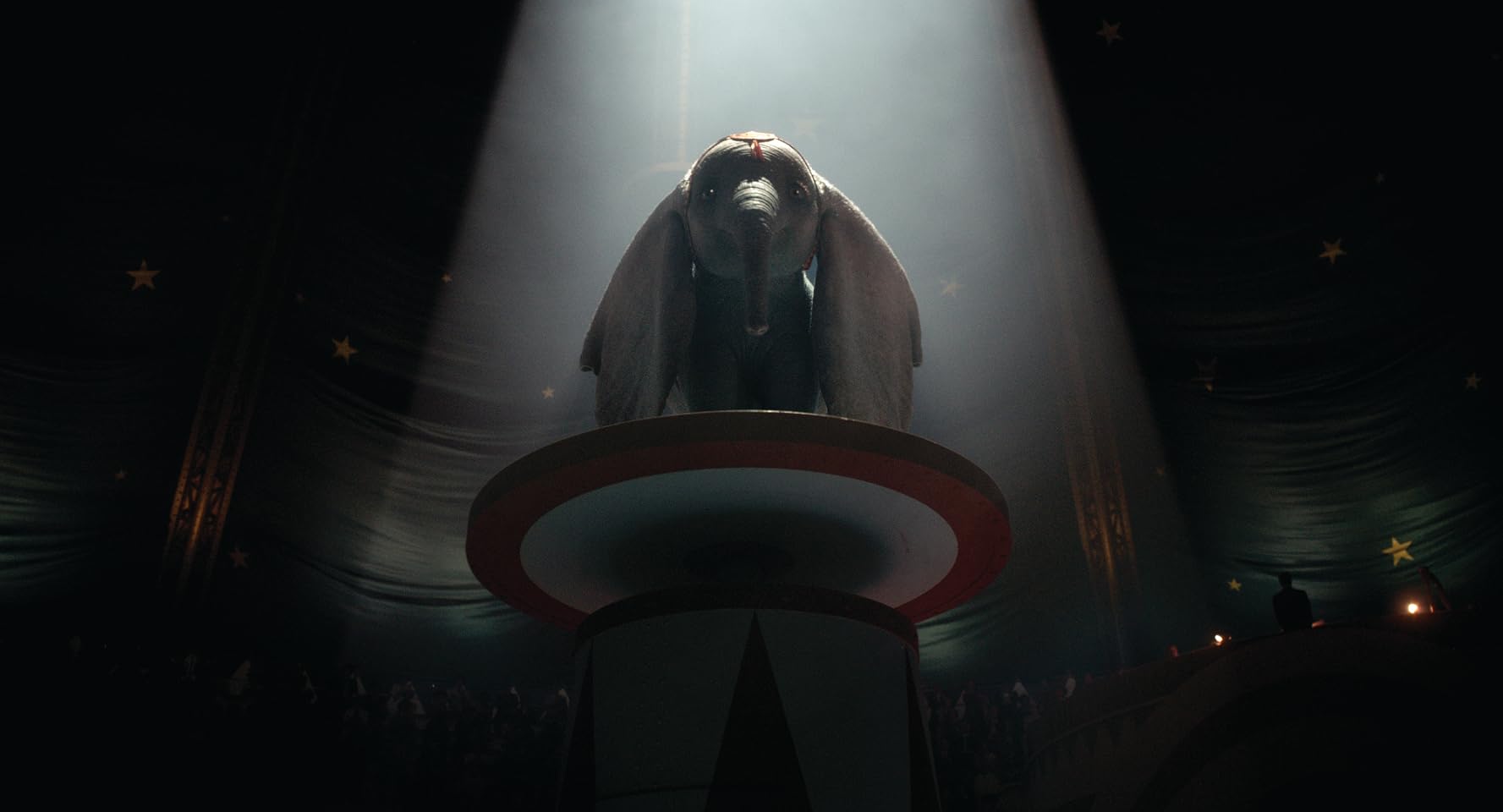
Dumbo in his film, Dumbo. Image courtesy Disney.
It's been awhile since Tim Burton has made an interesting movie. His recent slate of films have been either incomplete efforts – inklings of his old aspirations that never quite land – or yeoman work for Disney. Dumbo, Burton's interpretation of classic (and wicked racist) Disney film, fits more in the former category than the latter. It has a few moments of zaniness befitting Beetlejuice or Pee-wee's Big Adventure, but the result is often frustrating and ultimately slight.

Dumbo stars Colin Farrell as Holt Farrier, a cowboy returning home to circus life following his service in World War I. His transition back to being a performer is rocky at best; his wife died of influenza, leaving him alone with daughter Milly (Nico Parker) and son Joe (Finley Hobbins). Ringmaster Max Medici (Danny DeVito) has demoted him to elephant handler, and his chances of getting his old job back are stymied by the arm he lost in the war. But things start to turn with the addition of Jumbo the elephant, who soon gives birth to the eponymous large-eared creature. Once Dumbo starts to fly, he draws the attention of V.A. Vandevere (Michael Keaton), who runs the wondrous Dreamland in the big city. Vandevere wants to pair Dumbo with the high-flying Colette (Eva Green) to create the most magnetic act in town, but the Farriers soon learn Dreamland is little more than a facade.
 
The funny thing about Dumbo is the movie isn't about its titular character, but about the struggles of the Farrier family. It's a pragmatic script choice, as it's difficult to center the movie around a CGI elephant that doesn't speak, but it causes the film to lose a lot of its luster. The Farrier family troubles are far less interesting than the issues Dumbo and Jumbo face, or, rather, the film does a poor job selling the emotional complexities between Holt, Milly, and Joe. It's surprising considering how many hurdles screenwriter Ehren Kruger threw at the Farriers – a barely employed father returning from war without an arm to two children who recently lost their mother is kind of a cheat. Somehow, the film doesn't take advantage of the cheat it gave itself; the relationships are never given the time needed to grow from that problematic baseline. Things are awkward until they're not, and few bumps or troubles are depicted.

Even though the story is about the Farriers, the movie's heart belongs to Dumbo and Jumbo. Their connection is what should own the story, at least given the amount of heft Burton and Kruger put into the silent tale of mourning elephants. Yet the story balance is completely off; by dividing the narrative between the Farriers and the elephants, the film never gives enough time to either family unit to grow. . Making the movie live action effectively necessitates the addition of human characters to drive the story, but the human family is the worst part of this movie.

There's a lot to be frustrated with about Dumbo. The story is wonky and littered with holes – the flying elephant is the most realistic aspect of the movie. The dialog is uninspired, leaving the actors with little buffer to fail. The performances, aside from Keaton and Green, are spotty to weak. The filmmakers effectively doubled the run time of the original to add more story and didn't have much of a story to tell.

Except for the existence of Dreamland and Vandevere. This is about as close as viewers get to the old Burton, an oddly fascinating place that doesn't try too hard to be quirky. Dreamland contains a lot of potential as a setting, given the electric wonders and how poorly the lights hide the park's dark soul. It's a place where dreams come true, but the price is unfathomable, not too far removed from Pinocchio's Pleasure Island. Dreamland though is underutilized as a location; there's far more to the place than the film allows viewers to see because the first act is spent in the middle of nowhere. Perhaps Burton would have been better served setting the entire film in Dreamland, allowing the place's inherent creepiness to sell the inevitable feel-good ending. Dreamland is about as close as it gets to old-school Burton, making it so cruel how close Dumbo is to being the fantastically strange film its meant to be.

Review: Two out of Five Stars

Click here to see the trailer.

Rating: PG
Run time: 112 minutes
Genre: Fantasy

tl;dr

What Worked: Michael Keaton, Eva Green, Dumbo and Jumbo

What Fell Short: CGI, Inconsistent Acting, Script Issues

What To Watch Instead: Dumbo

Thursday, March 21, 2019

Us finds horror in implications and atmosphere

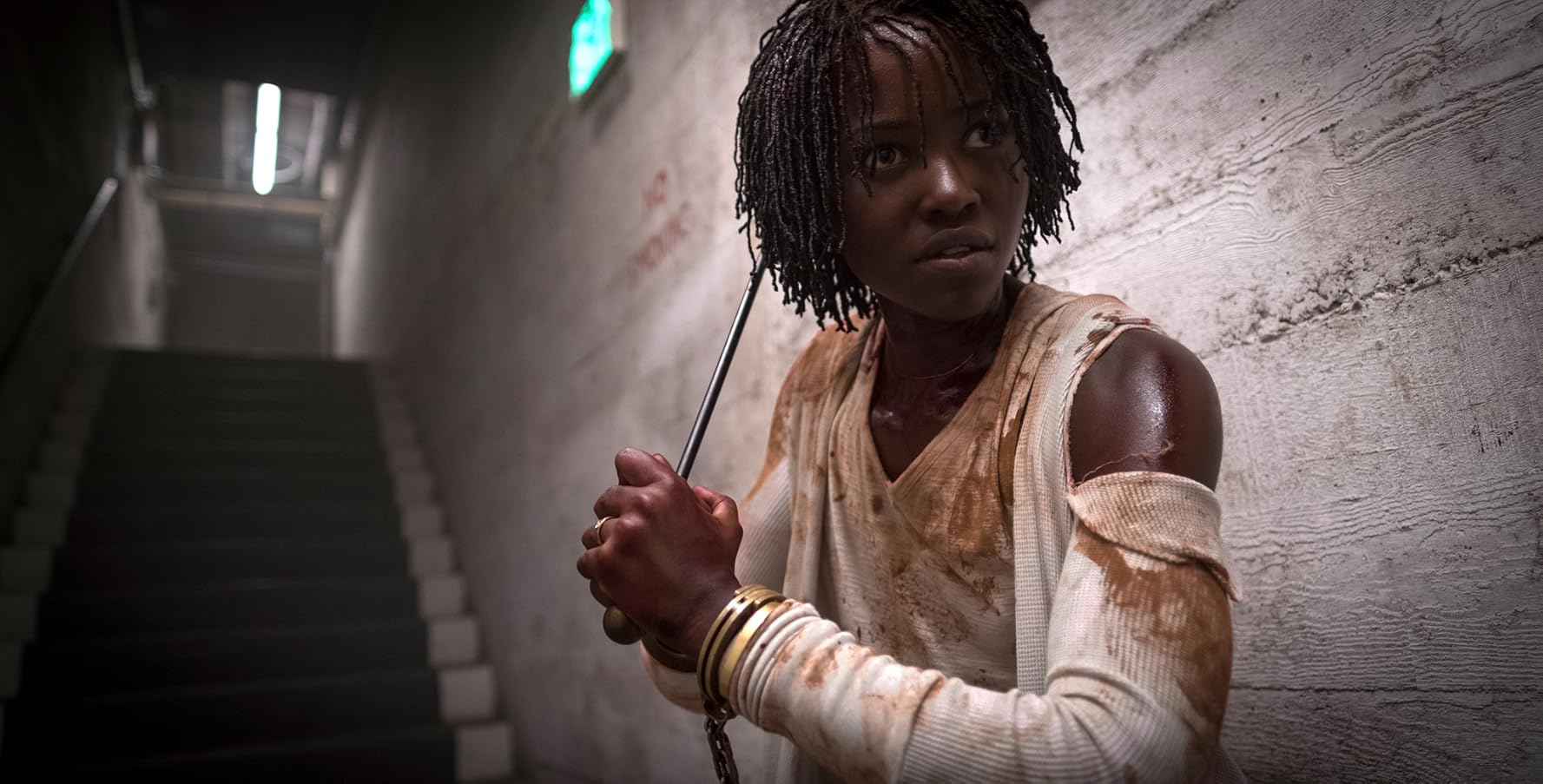
Lupita Nyong'o in Us. Image courtesy Universal Pictures.
There is something bothersome about Us, a slow dawning sense of terror that just lingers for a spell once the curtain closes and the lights go up. The film otherwise lacks a true moment of shock or terror – the jump scares are minimal, and the humor is ample enough to mitigate some of the traditionally scary moments – but goodness are the implications of Jordan Peele's film absolutely awful to dream about. Even as Us is hampered by ambitions it can't quite reach, it excels brilliantly at planting some dreadful thoughts and allowing them to grow.
 
Us stars, and is often carried by, the enigmatic Lupita Nyong'o. She plays Adelaide Wilson, a normal mom on vacation in Santa Cruz with her husband Gabe (Winston Duke), daughter Zora (Shahadi Wright Joseph), and son Jason (Evan Alex). It's a typical beach vacation – sun, sand, copious amounts of booze with friends Kitty (a great Elisabeth Moss) and Josh (Tim Heidecker) – except for a dark cloud that hangs over Adelaide. She has a bad childhood memory of running into another version of herself, and she can't escape the feeling she hasn't escaped her other self. Her fears come to fruition when their home is invaded by the Wilson's doppelgangers, who have murderous intentions for Adelaide and her family.

As shown in Us and Get Out, Peele has an excellent grasp of the fundamentals of horror. He's an expert at evoking discomfort even amid what are otherwise friendly and bright locations – a busy boardwalk filled with games and rides is just as terrifying as the spookiest of houses in Peele's hands. Something sinister lurks behind every corner, which works conceptually with Us, a movie whose universe contains a shallow mirror just below a vibrant surface. The Wilson family can't trust the upper-middle class shell they've created for themselves because right below the surface are the forgotten wishing for a taste of what they have.

And, well, there's a lot that can be read into that idea. Us could very well serve as a political statement, centering on the subjugation of a class of people who aren't even worth considering. The film could be a comment about the illusions of wealth, or about the strength of family. It can be about the emptiness of life in a technological age, about the ferociousness of motherhood, about fatalism, about the complexities of the soul. Peele's films are read as much as they are watched – he's just as skilled at planting clues as he is setting atmosphere – yet the message for Us is a little muddled. Peele has a lot to say about a lot of subjects with Us, and he can't deliver on everything he wants to say. The enormous ambition he has with this film is admirable and worth an attempt to emulate, but his drive toward divine profundity comes at the expense of a thematic direction and a modicum of sanity.

Us suffers a little from a tonal funk. The film relies a lot on its sense of humor – it's often as funny as it is scary – but the jokes undercut some of the vital gravitas of the horror. Moments designed for silent awe are infiltrated with uproarious laughter from the audience because they aren't quite sure which direction the film is leading them toward. The divide between humor and fear is often quite thin – a point Peele is very well aware of – but the film can't shed its jokiness enough for some of the horror to truly hit.

Well, at least in the moment. The brilliance of Us lies in the after scare, the residual fear that boomerangs back with more force than it was thrown. The final twist creates a rabbit hole of horrible thoughts and possibilities about the very nature of humanity and the lack of clarity between good and evil. It's a disturbing note to end a film on, the kind that results in a few chills and a restless night miles away from the theater. The point of Us is to leave its audience perturbed by these ideas. It wants to exploit the dark thoughts that reside in the depths of the mind and bring them to the surface, haunting the viewer like the best horror films should.

Review: Four and a half of Five Stars

Click here to see the trailer.

Rating: R
Run time: 116 minutes
Genre: Horror

tl;dr

What Worked: Lupita Nyong'o, Elisabeth Moss, Atmosphere, Implications

What Fell Short: Imbalanced tone, uncontrolled ambition

What To Watch As Well: Get Out, C.H.U.D.